
Best Lightweight Wheelchairs for Travel
Table of Contents
- What Makes a Lightweight Wheelchair Suitable for Travel
- How to Choose a Travel Wheelchair: Key Features and Specifications
- Carbon Fibre Powerchairs: Why They Lead for Portability
- Top Lightweight Wheelchair Models for Travel
- Airline Approved Electric Wheelchairs: Travel Requirements and Compliance
- Folding Mechanisms and Storage: Practical Considerations for Car Transport
- Weight Capacity and Frame Materials: Balancing Durability with Portability
- Battery Range and Comfort: Managing Real-World Performance
- Frequently Asked Questions
Last Updated: September 2, 2026
What Makes a Lightweight Wheelchair Suitable for Travel
A lightweight wheelchair for travel combines portability with reliability, designed for users who refuse to let mobility limitations restrict their independence. Travel wheelchairs typically weigh 12-20kg, fold to fit standard car boots, and feature quick-release batteries meeting aviation regulations.
How to Choose a Travel Wheelchair: Key Features and Specifications
Weight and portability form the foundation of any travel decision. A chair weighing 12-13kg is genuinely easy to lift into a car boot repeatedly. At 16-18kg, you'll feel the difference on your shoulders. Beyond 20kg, most users find regular lifting uncomfortable.
Folding mechanism and storage footprint determine whether your wheelchair fits your vehicle. Measure your car boot before purchasing. The narrowest fold available is 22cm wide; a flat fold (35cm tall) saves vertical space.

Battery range and removability are inseparable from travel capability. Removable batteries let you charge separately from the chair. Most travel chairs offer 8-15 miles of range per charge (RESNA Assistive Technology Standards). Real-world range typically runs 10-20% lower than manufacturer figures due to user weight, terrain, temperature, and speed (Peer-reviewed research on wheelchair battery performance).
Weight capacity matters more than many users realise. Most lightweight travel chairs support 120kg; some extend to 150kg or 180kg. Exceeding the rated capacity degrades performance and reduces battery range.
Frame material influences weight and durability. Carbon fibre offers genuine strength-to-weight advantages. Magnesium alloy is lighter than aluminium yet strong and corrosion-resistant. Aluminium is heavier but affordable and proven.
Joystick control and comfort features affect daily usability. A 360-degree joystick offers flexibility for different hand positions. Breathable mesh seats work better than solid cushions for all-day use. Adjustable footrests and armrests accommodate different body proportions.
| Feature | Why It Matters | What to Prioritise |
|---|---|---|
| Weight (without battery) | Determines lifting ease and fatigue | Under 15kg for regular lifting; 15-18kg acceptable if lifted infrequently |
| Folded dimensions | Determines car boot fit and storage | Width under 25cm; length under 80cm for most vehicles |
| Battery removability | Enables airline travel and flexible charging | Quick-release mechanism essential for frequent travel |
| Range per charge | Determines daily activity scope | 12+ miles for full-day outings; 8-10 miles adequate for shopping trips |
| Weight capacity | Ensures performance and longevity | Choose capacity with at least 10kg buffer above your weight |
| Frame material | Balances weight, durability, and cost | Carbon fibre for frequent travel; magnesium for active use; aluminium for budget |
Carbon Fibre Powerchairs: Why They Lead for Portability
Carbon fibre represents the pinnacle of lightweight wheelchair engineering, offering genuine strength-to-weight advantages that aluminium and magnesium cannot match. Carbon fibre chairs weigh 13-16kg typically, positioning them in the genuinely portable range. The material's rigidity prevents the gradual loosening and creaking that affects lighter aluminium frames over time.
A carbon fibre chair at 13kg with a 250W motor delivers performance comparable to an 18kg aluminium chair with identical specifications. Over months and years, that 5kg difference accumulates into genuine fatigue reduction.
Carbon fibre commands a price premium, typically £200-400 more than comparable aluminium models. For users who travel monthly or more frequently, this premium pays for itself through reduced lifting strain and reliable performance.
Top Lightweight Wheelchair Models for Travel
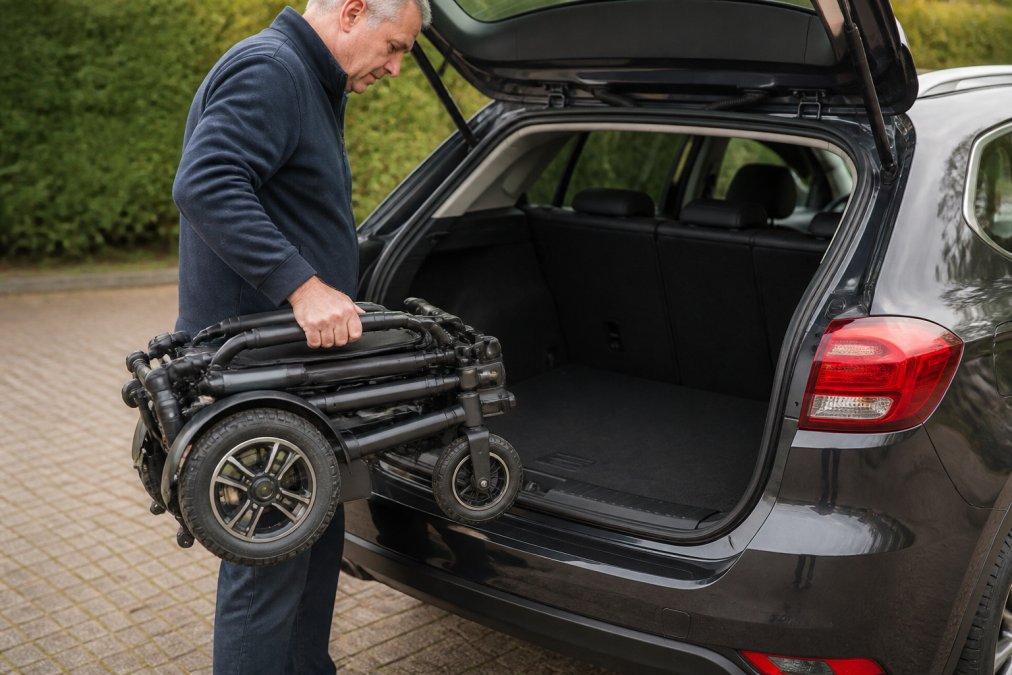
MagNeo: The Lightest in the Range at 12.3kg
The MagNeo is the lightest electric wheelchair in our range, weighing just 12.3kg without batteries. The magnesium-alloy frame is lighter than aluminium yet maintains durability for daily use. It folds remarkably flat at 35cm tall. The dual quick-release 24V 6Ah batteries provide up to 15 miles of combined range. The 200W brushless motors deliver smooth, quiet performance. At £999.99, the MagNeo represents exceptional value for users prioritising absolute minimum weight.

Best for: Users with limited lifting capacity, those with small car boots, and active seniors who value ease of transport.
Evora Carbon: Britain's Narrowest Fold at 22cm
The Evora Carbon folds to just 22cm wide, making it ideal for users with compact cars or tight storage spaces. The genuine carbon fibre frame weighs 13kg. The 250W brushless motors provide responsive, quiet acceleration. The removable 24V 10Ah lithium battery offers up to 12 miles of range and meets airline requirements. At £1,249.99, the Evora Carbon suits users whose vehicle or storage space is genuinely constrained.
Best for: Users with compact cars, those with narrow storage spaces, and frequent air travellers.
Firefly: Premium Performance at Half the Carbon Fibre Price
The Firefly delivers premium performance at an accessible price point, weighing 14.5kg. The 280W brushless motor system provides smooth acceleration. The quick-release 10.4Ah lithium battery delivers up to 12 miles of range and meets airline requirements. The LCD joystick displays real-time battery life and system alerts. At £849.99, the Firefly represents exceptional value for users seeking brushless motor reliability without the carbon fibre price tag.
Best for: Budget-conscious users who prioritise reliability and active seniors.
Vantage Carbon: Flexibility Between Powered and Self-Propelled
The Vantage Carbon offers dual-mode capability: drive it powered with the joystick, or self-propel by hand using the large 50 cm rear wheels. This flexibility means you're never stranded if the battery runs low. The carbon fibre frame weighs 16kg. The large 50 cm wheels with cushioned PU tyres deliver the smoothest ride in our carbon range. At £1,395.99, the Vantage Carbon suits users who value the reassurance of a manual backup.
Best for: Users with variable strength levels and those concerned about battery reliability.
LiteMax 2: Extended Range for Day Trips and Longer Journeys
The LiteMax 2 offers extended battery options that set it apart from ultralight models. The standard 12Ah battery delivers up to 15 miles; the optional 20Ah extended-range battery provides up to 25 miles. Weighing 19.8kg, it sits heavier than premium carbon fibre options but delivers more range and capacity. The 120kg weight capacity is generous. At £794.99 with the standard battery, the LiteMax 2 offers exceptional value for users prioritising range.
Best for: Users planning full-day outings and those with longer commutes.
Airline Approved Electric Wheelchairs: Travel Requirements and Compliance
Air travel with an electric wheelchair requires understanding airline regulations and battery specifications. Most airlines approve lithium-ion batteries under specific conditions, but rules vary between carriers.
The critical specification is the watt-hour (Wh) rating. Most airlines permit batteries up to 100Wh in carry-on luggage without special approval (UK Civil Aviation Authority guidance on dangerous goods). Batteries between 100-160Wh require airline approval but are generally permitted with advance notification. Most travel wheelchairs use 24V batteries rated between 60-100Wh, placing them safely within standard allowances.
Removable batteries are essential for air travel. You must disconnect the battery from the wheelchair frame before check-in. All Etech Mobility travel chairs feature quick-release batteries designed for this requirement.
Before booking any flight, contact your airline directly and provide battery specifications. Request written confirmation that your specific wheelchair model is approved.
When flying, arrive early to allow time for battery inspection. Pack your charger in carry-on luggage. Request wheelchair assistance at the gate; most airports provide aisle chairs for boarding if your wheelchair cannot fit through the cabin aisle.
Folding Mechanisms and Storage: Practical Considerations for Car Transport
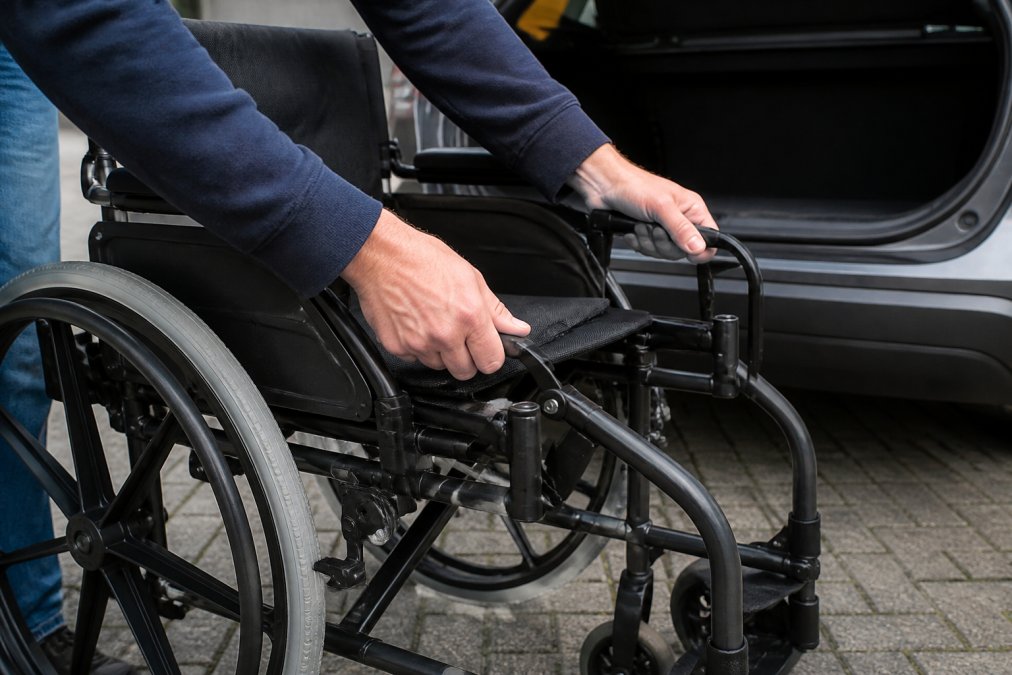
Folding mechanisms vary significantly across lightweight wheelchairs, and ease of folding directly impacts whether you'll actually use your chair for travel. A mechanism requiring two hands, specific sequencing, or significant force becomes frustrating after repeated use.
One-handed folding is valuable if you have limited hand strength or arthritis. Test the folding mechanism in person before purchasing.
Automatic folding mechanisms remove manual effort entirely. Remote-controlled folding lets you fold and unfold without physical exertion. The trade-off is additional weight and cost; automatic-folding chairs typically weigh 2-4kg more.
Storage footprint determines whether your chair fits your vehicle. Measure your car boot in three dimensions. A chair folding to 76cm length and 22cm width fits most standard boots comfortably.
Quick-release wheels simplify transport for some users by reducing the folded profile and weight, though assembly/disassembly requires strength.
Storage location matters as much as folded dimensions. A flat fold (35cm tall) saves hallway or cupboard space. A narrow fold (22cm wide) matters more for repeated car boot loading. Match the folding characteristic to your actual storage needs.
Weight Capacity and Frame Materials: Balancing Durability with Portability
Weight capacity and frame material are inseparable decisions. A heavier user requires a stronger frame, which typically means increased weight and reduced portability.
Standard capacity chairs support users up to 120kg, accommodating the majority of users whilst minimising frame weight. Extended capacity chairs support 150kg or 180kg, adding frame reinforcement for larger users. If you weigh above 120kg, stepping up to extended capacity ensures reliable performance and longevity.
Frame material selection influences both weight and durability:
Carbon fibre offers the best strength-to-weight ratio. A 13kg carbon fibre chair with a 120kg capacity outperforms a 16kg aluminium chair with identical specifications. The material is naturally corrosion-resistant. The premium cost is justified for frequent travellers.
Magnesium alloy is lighter than aluminium yet maintains comparable durability. The MagNeo's magnesium frame weighs just 12.3kg whilst supporting 120kg. The material is strong and corrosion-resistant, offering an excellent middle ground between weight and cost.
Aluminium is heavier than carbon fibre or magnesium but affordable and proven. For occasional users or those on limited budgets, aluminium chairs deliver reliable performance without premium pricing.
Frame rigidity determines how the chair feels during daily use. A rigid frame feels solid and responsive; a flexible frame may develop creaks over time. For intensive daily use, frame rigidity justifies the premium cost.
Battery Range and Comfort: Managing Real-World Performance
Battery range represents one of the most misunderstood specifications in wheelchair selection. Manufacturers publish "up to" figures assuming ideal conditions: light user weight, smooth terrain, consistent speed, and moderate temperature. Real-world range typically runs 10-20% lower.
Typical range expectations for travel chairs are 8-15 miles per full charge, accommodating shopping trips, museum visits, or social outings. If your daily activities consistently exceed 15 miles, consider extended-range battery options or dual battery systems.

Range variables you can control include speed (slower extends range), terrain (smooth surfaces extend range more than uneven ground), and temperature (cold weather reduces range by 10-15%). User weight is the dominant factor; a user weighing 110kg achieves significantly more range than one weighing 120kg on the same chair.
Battery management extends usable range. Charging fully before each outing ensures maximum range. Avoiding complete depletion extends overall battery lifespan.
Comfort features become critical during extended use. A breathable mesh seat beats a solid cushion for all-day comfort. Adjustable footrests accommodate different leg lengths. Armrests that lift or adjust improve mounting and dismounting ease. For users spending 4+ hours daily in their wheelchair, these features justify their cost.
Selecting the best lightweight wheelchairs for travel requires matching your specific needs, weight capacity, daily range, folding preference, and lifting ability to the available options. Etech Mobility's range spans from the ultralight MagNeo at 12.3kg through to extended-capacity models supporting 180kg, ensuring a suitable option exists regardless of your requirements. Consider your actual car boot dimensions, typical daily activity scope, and lifting capacity before deciding. The best wheelchair is the one you'll actually use regularly.
Frequently Asked Questions
Q: What is the best lightweight wheelchair for travel?
A: The best lightweight wheelchair for travel depends on your needs, but the MagNeo stands out as the lightest at just 12.3kg, whilst the Evora Carbon folds to 22cm. For those wanting premium performance without the carbon fibre price tag, the Firefly at 14.5kg offers brushless motors and airline-friendly batteries. All feature collapsible frames, quick-release batteries, and weigh under 20kg, making them genuinely portable for car boots and aeroplane cabins.
Q: Are carbon fibre powerchairs better for travel than aluminium models?
A: Carbon fibre powerchairs offer superior strength-to-weight ratios, meaning they're lighter and more durable than aluminium for the same load capacity. Models like the Evora Carbon and Vector Carbon weigh 13-13.8kg yet support 120kg users. However, aluminium chairs like the Firefly deliver comparable portability at lower cost. Choose carbon fibre if you prioritise the absolute lightest weight and frame rigidity; choose aluminium if budget and performance matter more than saving a few kilograms.
Q: How do I know if a wheelchair will fit in my car boot?
A: Check the folded dimensions against your boot space. The MagNeo folds to 51 x 56 x 35cm (35cm tall, the flattest fold), whilst the Evora Carbon folds to 76 x 22 x 69cm (narrowest at 22cm wide). Measure your boot length, width and height, then compare. If space is tight, the MagNeo's flat profile or Evora's narrow width will suit best. Most compact cars accommodate wheelchairs under 20kg when folded; larger vehicles have more flexibility.
Q: What battery range can I realistically expect on a single charge?
A: Real-world range depends on user weight, terrain, temperature and speed. Most lightweight models deliver 8-15 miles per charge: the Evora Carbon reaches up to 12 miles, the MagNeo up to 15 miles with dual batteries, and the LiteMax 2 up to 15 miles on the standard battery or 25 miles with the extended 20Ah option. For shopping trips or day outings under 10 miles, a single charge is sufficient. For longer journeys, consider models with removable batteries so you can carry a spare.
Q: Can I fold and unfold a lightweight wheelchair myself if I have shoulder or arm pain?
A: Most lightweight manual-fold models require some arm strength to operate the folding mechanism, which can be challenging with arthritis or shoulder pain. The Firefly folds in just 2 seconds with minimal effort. The Converge 180 and Freedom Pro AF feature automatic remote-control folding, you press a button and the chair folds itself, eliminating the need to lift or manipulate the frame. If self-folding is essential due to pain or weakness, automatic models remove this barrier entirely.