
Carbon Fibre Electric Wheelchair Durability Guide
Table of Contents
- Why Carbon Fibre Changes the Durability Equation for Electric Wheelchairs
- Carbon Fibre vs Aluminium Wheelchair: A Practical Comparison
- Electric Wheelchair Lifespan: What to Realistically Expect
- How to Maintain a Carbon Fibre Powerchair to Maximise Its Life
- Battery Range, Brushless Motors and Real-World Performance
- Folding, Transport and Travel-Friendly Design
- Insurance, Funding Eligibility and the Carbon Fibre Wheelchair Investment
- Conclusion
Last Updated: August 19, 2026
Carbon fibre has transformed electric wheelchair durability and performance. This guide addresses the question "how long will it last?" with honest answers about material science, real-world performance, and limitations. At Etech Mobility, we specialise in premium carbon fibre powerchairs and hear this concern constantly from customers who need to know whether the investment is justified.

Carbon fibre is an aerospace-grade composite material engineered for applications where structural integrity under repeated stress is non-negotiable. The same properties that make it suitable for aircraft fuselages translate directly into wheelchair frames that are ultra-lightweight and structurally superior to conventional metals. According to the British Standards Institution's guidance on composite materials, composite structures correctly manufactured to aerospace standards demonstrate tensile strength values far exceeding standard aluminium alloys at a fraction of the weight.
Why Carbon Fibre Changes the Durability Equation for Electric Wheelchairs
The core argument for carbon fibre powerchairs is simple: you do not have to choose between light and strong. Traditional materials force a compromise. Carbon fibre does not.
Aerospace-Grade Material: What It Actually Means
Carbon fibre is a composite material formed by weaving thousands of carbon filaments into sheets, then bonding them with resin under heat and pressure. The resulting structure has an exceptional weight-to-strength ratio, significantly stiffer and stronger than aluminium by weight, which is why it became the material of choice in aerospace engineering before filtering into medical devices and mobility aids.
When a wheelchair manufacturer describes their frame as aerospace-grade, it means the carbon fibre layup, resin system, and curing process meet the same material specifications used in aviation components. This manufacturing consistency directly determines how the frame behaves under repeated loading cycles. Properly manufactured aerospace-grade composite materials maintain their structural integrity across thousands of load cycles without measurable degradation.
The practical result: a chair weighing 13kg can carry a user weighing many times that without the frame flexing, creaking, or fatiguing in the way a lightweight aluminium frame might over time.
Shock Absorption, Vibration Dampening and Frame Rigidity
Carbon fibre absorbs and dissipates vibrational energy within the composite matrix itself, unlike metal frames which transmit vibration directly through the structure. For powerchair users travelling over uneven pavements, cobblestones, or dropped kerbs, this is not a minor comfort detail. Chronic vibration transmission contributes to fatigue and discomfort, and for users with conditions affecting joints or the spine, it can significantly worsen symptoms over a full day of use.
Frame rigidity also affects motor efficiency. A frame that flexes under load wastes energy that brushless motors must compensate for. A rigid carbon fibre chassis transfers power more directly to the wheels, contributing to better battery range and more predictable handling.
Carbon Fibre vs Aluminium Wheelchair: A Practical Comparison
The carbon fibre vs aluminium wheelchair debate is not simply about prestige. The differences are measurable and affect daily usability in concrete ways.
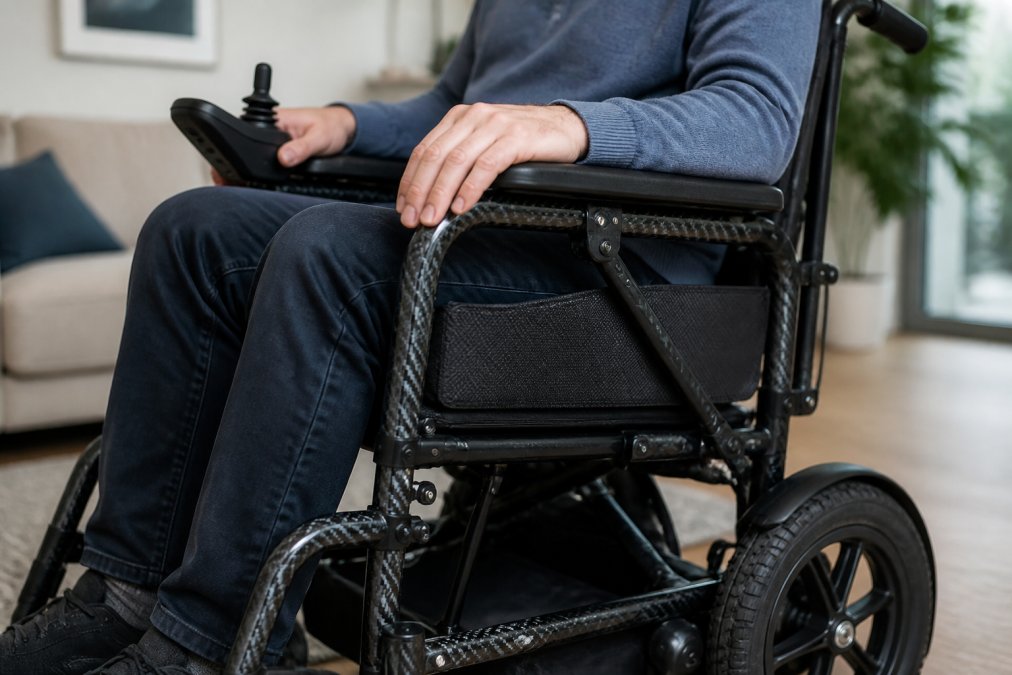
Weight-to-Strength Ratio and Load-Bearing Capacity
Aluminium wheelchairs designed to be lightweight typically achieve this by reducing wall thickness in frame tubing, sacrificing load-bearing capacity and increasing susceptibility to bending under impact. Carbon fibre achieves its low weight through material properties rather than material reduction, meaning load-bearing capacity is not sacrificed.
The Etech Mobility Atlas HD Carbon supports a user weight of 150kg while the chair itself weighs under 14kg. That combination is not achievable with aluminium at a comparable price point without significant structural compromise.

| Feature | Carbon Fibre | Standard Aluminium |
|---|---|---|
| Frame weight (typical) | 13-14kg | 18-25kg |
| Load-bearing capacity | Up to 150kg | Typically 100-120kg |
| Vibration dampening | Excellent (inherent) | Poor (transmits vibration) |
| Corrosion resistance | Excellent (non-metallic) | Moderate (anodised coating) |
| Repairability | Specialist required | More widely repairable |
| Lifespan expectation | 7-10+ years | 5-7 years |
Corrosion Resistance and All-Weather Performance
Carbon fibre is non-metallic and does not rust, oxidise, or corrode. For a mobility aid used outdoors in variable weather, this is a significant advantage over aluminium, which relies on anodising or powder coating to resist corrosion. Once that surface treatment is scratched, aluminium frames begin to degrade at the exposed point.
A carbon fibre frame maintains its structural properties whether caught in rain, stored in a damp car boot, or used on a beach path. This corrosion resistance is one of the primary reasons carbon fibre powerchairs have a longer realistic lifespan than their aluminium equivalents.
Electric Wheelchair Lifespan: What to Realistically Expect
Electric wheelchair lifespan depends on three factors: frame material, drivetrain quality, and maintenance. Carbon fibre addresses the first factor definitively. The second and third require honest discussion.
Structural Fatigue Over Time: The Honest Picture
All structural materials experience fatigue under repeated loading. Carbon fibre's fatigue characteristics differ from metals in an important way: metals typically show progressive deformation before failure, while carbon fibre tends to maintain its properties right up to a threshold, after which failure can be more sudden.
A well-maintained carbon fibre frame from a reputable manufacturer should show no meaningful structural degradation for seven to ten years under normal use. However, impact damage should be inspected by a specialist, because surface cracks in carbon fibre can mask internal delamination that is not visible to the naked eye.
Repairability, Specialist Servicing and What Happens When Things Go Wrong
Carbon fibre frames cannot be welded, straightened, or repaired using the same techniques that work on aluminium. Repair requires specialist composite repair skills and materials. For the vast majority of users, this distinction never becomes relevant. Normal use does not damage a carbon fibre frame. But it is worth knowing before you buy.
For drivetrain components, motors, controllers, and batteries, repairability is broadly comparable between carbon fibre and aluminium powerchairs. When choosing a supplier, after-sales support matters as much as the chair itself.
How to Maintain a Carbon Fibre Powerchair to Maximise Its Life
Proper maintenance of a carbon fibre powerchair is straightforward and takes less time than most users expect.
- Clean the frame monthly with a damp cloth and mild detergent. Avoid abrasive cleaners and high-pressure water. Dry thoroughly before storage.
- Inspect the folding mechanism every three months for stiffness, misalignment, or unusual resistance. Lubricate pivot points with silicone-based lubricant only.
- Check tyre condition and pressure regularly. Under-inflated tyres increase rolling resistance and reduce battery range.
- Inspect battery contacts for corrosion or debris. Keep contacts clean and dry.
- Charge the lithium-ion battery according to manufacturer guidance. Avoid leaving the battery fully discharged for extended periods.
- Examine the frame for surface chips, cracks, or unusual sounds when loaded. Address concerns with your supplier promptly.
- Store the chair in a dry environment when not in use.
Battery Range, Brushless Motors and Real-World Performance
Carbon fibre's weight advantage compounds with brushless motors. A lighter chassis delivers better real-world battery range than the same motors in a heavier frame. Brushless motors have fewer moving parts than brushed motors, generate less heat, require no brush replacement, and maintain consistent torque output across their service life.
Lithium-ion battery technology in current carbon fibre powerchairs offers practical range for most daily use patterns: shopping trips, visiting friends, outdoor walks. A common concern is being caught short on battery during an outing. The practical answer is to charge overnight before any planned longer trip and choose a chair whose rated range comfortably exceeds your usual requirements.
According to the NHS guidance on powered wheelchairs and scooters, battery range and charging time are among the most important practical considerations when selecting a powered mobility aid.
Folding, Transport and Travel-Friendly Design
The folding mechanism is where carbon fibre powerchairs earn their reputation for travel-friendly design. A chair weighing 13kg and folding to a compact profile can be lifted into a car boot by one person in a way that a 25kg aluminium chair simply cannot.
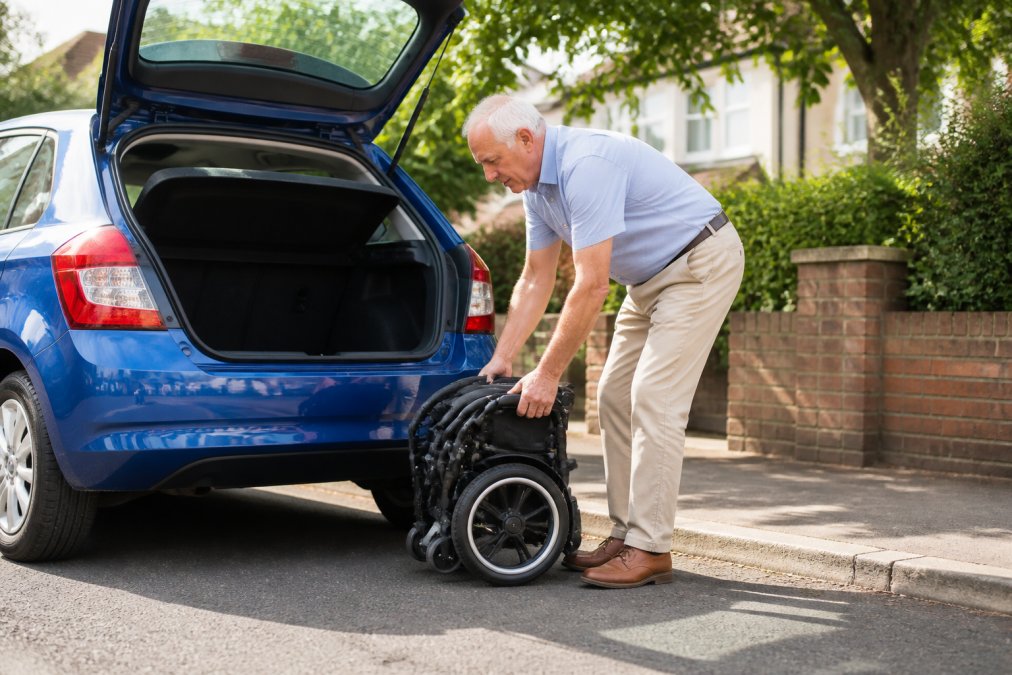
The Evora Carbon from Etech Mobility folds to an ultra-narrow 22cm profile, making it viable for small car boots and airline overhead lockers. The Vector Carbon offers a sportier design at 13.8kg with the same airline-friendly credentials. Both use a tool-free folding mechanism that most users can operate with one hand.

For users with arthritis in the shoulders or hands, the key question is whether the folding action requires grip strength or a sustained squeeze. The best folding mechanisms use a single lever or button action rather than requiring the user to compress or hold a release mechanism while simultaneously lifting.
Carbon fibre powerchairs that meet airline carry-on or hold specifications open up travel options that heavier chairs foreclose entirely.
Insurance, Funding Eligibility and the Carbon Fibre Wheelchair Investment
The upfront cost of a carbon fibre powerchair is higher than a standard aluminium model. Viewed against the lifespan expectation of seven to ten years or more, the annual cost of ownership is competitive with cheaper chairs that may need replacing every three to four years.
The Etech Mobility carbon fibre range starts at £1,249.99 for the Evora Carbon and extends to £1,395.99 for the Atlas HD Carbon and Vantage Carbon.
VAT relief: Mobility aids purchased by people with a chronic illness or disability are eligible for VAT relief under HMRC rules. This reduces the purchase price by 20%. Check the current eligibility criteria directly with HMRC's guidance on VAT relief for disabled people before purchasing.
Personal Independence Payment (PIP) and Attendance Allowance: These benefits do not fund equipment directly, but they exist to help cover the additional costs of living with a disability or health condition, including mobility equipment. Visit the official PIP guidance on GOV.UK for current eligibility criteria.
NHS wheelchair services: NHS provision focuses on clinical need and typically covers standard specifications. Carbon fibre models with premium features are less commonly funded through this route, but it is worth a conversation with your local wheelchair service if you have a clinical referral.
Insurance: Some home contents policies include mobility equipment. Specialist disability insurance products cover powerchairs specifically, including breakdown recovery and accidental damage.
The investment question ultimately comes down to what the chair enables. For users who have previously been stranded by a breakdown, struggled to lift a heavy chair into the car, or found a rigid frame too uncomfortable for daily use, the premium for a carbon fibre powerchair is the difference between a mobility aid that genuinely supports independence and one that creates new limitations.
Choosing a powerchair that will genuinely last and support daily independence requires more than reading a specification sheet. The real test is whether the chair performs reliably across years of real-world use, folds easily enough to travel with, and comes with support you can actually reach when something needs attention. Etech Mobility's carbon fibre range is built around exactly these priorities: ultra-lightweight construction, premium composite materials, brushless motors, and free delivery across the UK. Explore the full range or contact Etech Mobility directly to get personalised guidance on which model suits your specific needs and lifestyle.
Frequently Asked Questions
How long should a carbon fibre electric wheelchair last?
A well-maintained carbon fibre electric wheelchair frame can remain structurally sound for many years, often outlasting aluminium equivalents because composite materials resist corrosion and metal fatigue. The lithium-ion battery is usually the first component to need replacement, typically after two to five years depending on charge cycles and storage habits. Brushless motors and electronics generally last longer with routine care. Keeping the chair clean, storing it indoors and following the manufacturer's servicing schedule are the most reliable ways to protect your investment.
Is carbon fibre better than aluminium for a mobility aid?
For most users seeking a lightweight, travel-friendly powerchair, carbon fibre offers a better weight-to-strength ratio than aluminium, making it easier to lift into a car boot or carry up steps. Carbon fibre also resists corrosion, so outdoor use in wet conditions does not degrade the frame over time. The trade-off is cost: carbon fibre electric wheelchairs carry a higher upfront price. Repairability is also more specialist, so checking that your supplier offers good after-sales support is important before you buy.
Does carbon fibre crack under pressure?
Carbon fibre can crack under sharp, concentrated impact rather than the gradual bending that causes metal fatigue in aluminium frames. However, aerospace-grade composite materials used in quality electric wheelchairs are engineered with high tensile strength and impact resistance to handle everyday loads safely. The risk of cracking under normal use is low. Damage is more likely from a significant drop or collision. If you notice any unusual flex or visible damage to the frame, stop using the chair and contact your supplier for a professional inspection.
Can I get funding or benefits support to help pay for a carbon fibre wheelchair?
Several routes exist. The NHS Wheelchair Service can provide powered wheelchairs to eligible individuals, though availability and specification vary by integrated care board. Personal Independence Payment (PIP) and Attendance Allowance can help cover costs, and the Motability Scheme allows eligible claimants to use certain disability benefits towards a powered wheelchair. VAT relief is available on mobility aids for people with a qualifying disability, reducing the purchase price. Always check current eligibility criteria directly with the relevant scheme, as rules and thresholds change.