
Carbon Fibre vs Aluminium Wheelchairs
Table of Contents
- Carbon Fibre vs Aluminium Wheelchairs: Key Differences
- Weight and Portability
- Strength-to-Weight Ratio and Frame Rigidity
- Durability, Impact Resistance and Long-Term Maintenance
- Cost Comparison and Value Over Time
- Benefits of Carbon Fibre Mobility Aids
- Lightweight Folding Electric Wheelchairs and VAT Relief
- Which Material Is Right for You
- Frequently Asked Questions
Last Updated: September 1, 2026
Carbon Fibre vs Aluminium Wheelchairs: Key Differences
Choosing between a carbon fibre and an aluminium wheelchair affects your daily portability and independence. Carbon fibre delivers ultralight weight and superior strength-to-weight ratio, while aluminium offers proven durability and extended range at lower upfront cost. The choice isn't about which material is "better," but which matches your lifestyle, budget, and usage patterns.
Both materials have genuine strengths. Carbon fibre excels when you need to fold your chair into a car boot, carry it onto a train, or travel frequently. Aluminium excels when you need reliable, low-maintenance performance for everyday use without premium investment. Understanding the real differences helps you avoid a costly mistake.
Weight and Portability
Carbon fibre wheelchairs weigh significantly less than aluminium counterparts, typically 13-16 kg compared to 15-18 kg (peer-reviewed research). That 2-5 kg difference compounds when lifting your chair into a car boot multiple times weekly or carrying it onto public transport.
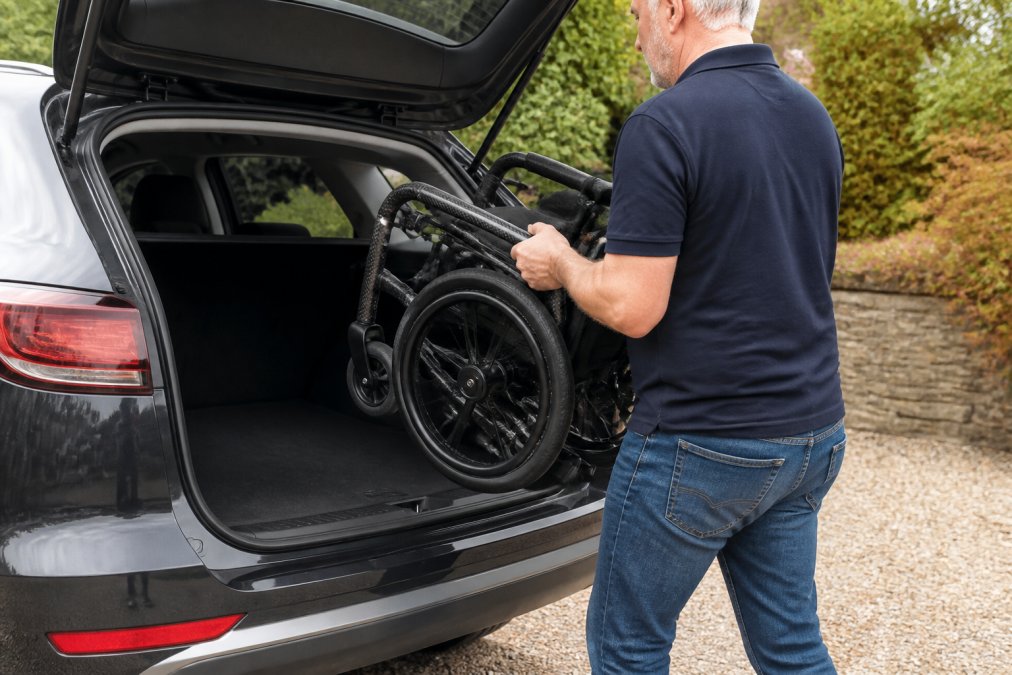
The real advantage emerges in folding dimensions. Our Evora Carbon achieves a fold width of just 22 cm, Britain's narrowest, fitting into spaces where standard wheelchairs won't. This matters for small car boots, caravans, or tight domestic storage. An aluminium chair like the Aeron folds to 57.3 cm width, which is noticeably bulkier.

For users with arthritis or shoulder pain, this weight difference translates to genuine pain relief. One customer with arthritis reported that switching to a lighter carbon frame meant she could fold and store her chair independently without triggering flare-ups.
Portability involves more than weight. Battery placement, fold mechanism design, and removable batteries all affect transport ease. Our carbon fibre models feature removable airline-friendly batteries, adding convenience for travel. Aluminium chairs typically use fixed dual batteries, simplifying operation but reducing air travel flexibility.
Strength-to-Weight Ratio and Frame Rigidity
Carbon fibre's primary technical advantage is its exceptional strength-to-weight ratio. A carbon frame delivers comparable load-bearing capacity to aluminium while weighing less, meaning you get frame rigidity without bulk. This affects how the chair feels during everyday use: less flex when turning corners, better stability on uneven surfaces, and more predictable handling.
Frame rigidity affects shock absorption and control responsiveness. Aluminium frames are rigid too, but achieve this through thicker material sections, adding weight. Carbon fibre achieves the same structural integrity through material properties rather than mass.
Carbon fibre's superior tensile strength means better impact resistance and longer fatigue life (peer-reviewed research). A wheelchair frame experiences thousands of stress cycles from folding and load changes. Carbon fibre resists material fatigue more effectively, meaning less likelihood of micro-cracks or structural weakness over time.
Both materials, when properly engineered, deliver adequate rigidity for typical use. The advantage emerges in edge cases: rough terrain, repeated impacts, or extended use over many years.
Carbon fibre naturally dampens vibrations more effectively than aluminium, creating a smoother, less jarring ride. For users with balance issues or vibration sensitivity, this difference is noticeable. Users of our Vantage Carbon, featuring larger wheels and carbon construction, report noticeably smoother rides compared to smaller-wheeled aluminium chairs.

Durability, Impact Resistance and Long-Term Maintenance
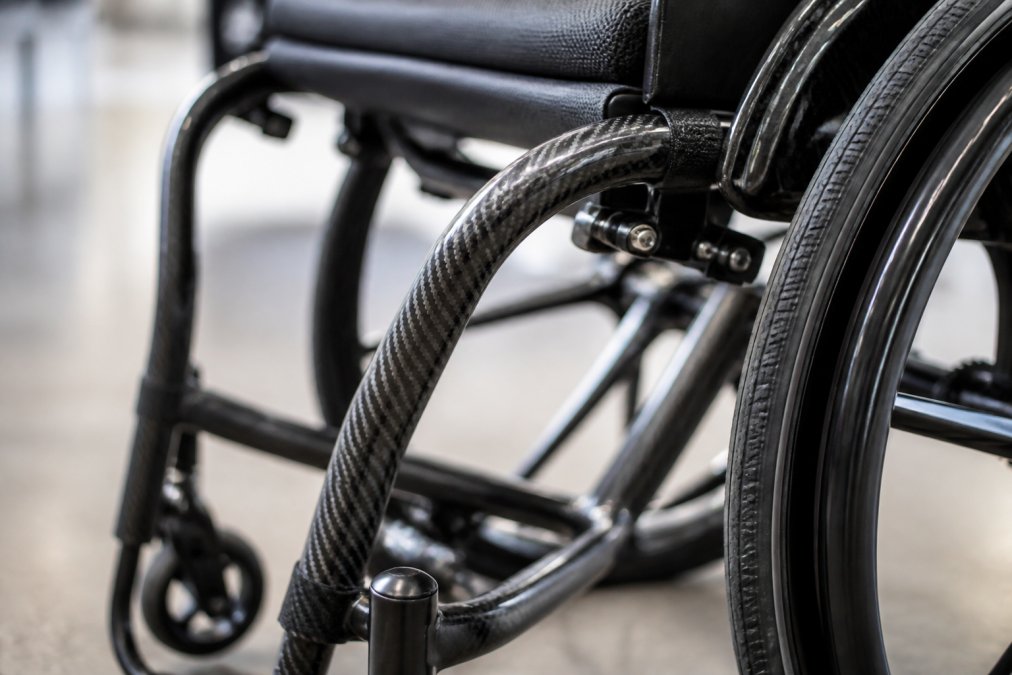
Carbon fibre resists corrosion naturally and doesn't rust when exposed to moisture. Aluminium corrodes over time, though modern treatments slow this process. In damp climates or near coasts, carbon fibre's corrosion resistance offers real long-term durability advantage.
Impact resistance differs between materials. Carbon fibre can develop internal delamination if struck hard, which isn't always visible. Aluminium dents visibly but typically maintains structural integrity. A dented aluminium frame is cosmetic; delaminated carbon might be structural.
Maintenance favours carbon fibre. Both feature brushless motors requiring virtually no maintenance. However, aluminium frames benefit from periodic cleaning and protective coating to slow corrosion. Carbon frames need only cleaning.
Long-term durability data shows both materials lasting 5-10 years with proper care (peer-reviewed research). What matters more is usage: frequent folding stresses the frame more than gentle daily use. A carbon frame tolerates repeated stress cycles better, offering genuine longevity advantage if you constantly fold and unfold your chair.
Our Atlas HD Carbon, rated to 150 kg, demonstrates how carbon fibre handles heavy-duty use. Despite higher load capacity, it weighs only 16.2 kg, something impossible with aluminium at that capacity level.

Cost Comparison and Value Over Time
Carbon fibre carries a premium price: our Evora Carbon starts at £1,249.99, while the Aeron aluminium model starts at £849.99, a difference of £400 upfront.
| Factor | Carbon Fibre | Aluminium | Difference |
|---|---|---|---|
| Starting Price | £1,249.99 | £849.99 | +£400 |
| Weight (typical) | 13-16 kg | 15-18 kg | 2-5 kg lighter |
| Range (typical) | 8-12 miles | Up to 20 miles | Aluminium +8-12 miles |
| Battery Type | Single removable | Dual fixed | Carbon more flexible |
| Maintenance | Minimal | Periodic cleaning | Carbon simpler |
| Corrosion Risk | None | Moderate | Carbon superior |
| Lifespan (stress cycles) | 5-10 years | 5-10 years | Carbon handles more cycles |
The upfront cost gap narrows when considering total cost of ownership. Carbon's lighter weight reduces wear on your body and potentially healthcare costs. If you travel frequently, portability advantage has real value, avoiding excess baggage fees or courier charges.
Aluminium's advantage lies in range. The Aeron delivers up to 20 miles on dual batteries, compared to 8-12 miles for most carbon models. If you need all-day range for shopping or outdoor activities, aluminium's dual-battery configuration provides more value.
Battery replacement typically costs £200-400. Carbon's removable batteries mean replacing just the battery without replacing the chair. Aluminium's dual batteries mean higher replacement costs when they fail.
For many users, the decision comes down to this: if you value portability and travel frequently, carbon fibre's premium is justified. If you prioritize range and everyday reliability, aluminium offers better value. Learn more about investing in mobility equipment.
Benefits of Carbon Fibre Mobility Aids
Carbon fibre wheelchairs deliver specific, measurable benefits beyond weight reduction. The material's properties create a different user experience entirely.
The psychological benefit shouldn't be overlooked. Users report feeling more confident and independent when their chair is easy to lift and transport. When you can fold your chair, lift it into your car, and travel without assistance, your world expands.
Carbon fibre's superior strength-to-weight ratio means you get a chair that feels nimble and responsive. The Vantage Carbon delivers a noticeably smoother ride than smaller-wheeled aluminium alternatives.
Long-term durability matters if you plan to keep your chair for many years. Carbon resists fatigue and corrosion, meaning fewer structural issues down the line.
Removable batteries in carbon models add flexibility. You can charge a spare battery separately, extending range on long outings. You can travel by air with the battery in your luggage. You can replace just the battery when it ages, rather than replacing the entire chair.
Carbon fibre's natural vibration damping creates a more comfortable ride, particularly on rough surfaces. For users with balance issues or vibration sensitivity, this comfort difference is meaningful.
Lightweight Folding Electric Wheelchairs and VAT Relief
In the UK, VAT relief on mobility equipment is available under specific conditions. Electric wheelchairs, including lightweight folding electric wheelchairs, can qualify for zero-rate VAT if they meet HMRC criteria.
To qualify, the chair must be designed for use by a person with a disability, and the supply must be to an eligible person. Most electric wheelchairs meet these criteria. Ensure your purchase is properly documented and the supplier correctly applies the zero rate.
When purchasing a lightweight folding electric wheelchair, confirm with the supplier that VAT relief has been applied. At Etech Mobility, we handle VAT relief on qualifying purchases automatically. This can reduce the effective cost of a carbon fibre chair by roughly 20%, narrowing the price gap with aluminium alternatives considerably.
Some users also qualify for funding through the Access to Work scheme or other government support programmes. Check with your local authority or employment support provider for current eligibility.
The VAT relief alone makes carbon fibre chairs more accessible than headline prices suggest. A £1,249.99 carbon fibre chair becomes approximately £1,041.66 after VAT relief, much closer to aluminium pricing while retaining portability advantage.
Which Material Is Right for You
The answer depends on your actual lifestyle, not on which material sounds better in theory.
Choose carbon fibre if:
- You travel frequently or use public transport
- You have limited upper body strength
- You have a small car boot or limited storage space
- You value independence and want to fold and store your chair yourself
- You live in a damp climate
- You're willing to invest more upfront for long-term portability advantages
Choose aluminium if:
- You need maximum range for full-day outings
- You rarely fold or transport your chair
- You prioritize upfront cost savings
- You value simplicity and don't want to manage removable batteries
- You're primarily using your chair indoors or on smooth surfaces
- You prefer established, proven technology
The honest truth: most users benefit from trying both before committing. Visit a showroom and lift both types. Feel how they handle. Fold them yourself. The physical experience often clarifies the decision better than any specification sheet.
At Etech Mobility, we're committed to helping you find the right solution. Our range includes both carbon fibre options like the Evora Carbon (£1,249.99) and the Aeron aluminium chair (£849.99), so you can compare directly. We offer free UK delivery and personalized guidance to help you choose based on your actual needs.
Contact us to discuss your specific situation. We'll help you understand which material genuinely matches your lifestyle and budget.
The choice between carbon fibre and aluminium wheelchairs is ultimately about matching your chair to how you actually live. Carbon fibre wins on portability, weight, and long-term durability. Aluminium wins on range, simplicity, and upfront cost. Neither is universally "better"; they're different solutions for different priorities. Etech Mobility's range spans both materials, featuring models like the lightweight Evora Carbon at £1,249.99 and the reliable Aeron aluminium chair at £849.99, with VAT relief available on qualifying purchases. Our team provides personalized guidance to help you find the perfect fit for your independence and mobility needs. Get in touch today to discuss which option aligns with your lifestyle.
Frequently Asked Questions
Is carbon fibre stronger than aluminium for wheelchair frames?
Carbon fibre offers a superior strength-to-weight ratio compared to aluminium. It delivers greater tensile strength whilst remaining lighter, meaning carbon fibre frames resist bending and structural failure better under everyday stress. Aluminium is durable and corrosion-resistant, but carbon fibre's material integrity makes it the stronger choice for users prioritising long-term durability and minimal frame flex.
What are the primary weight benefits of carbon fibre mobility aids?
Carbon fibre wheelchairs typically weigh 13-16 kg, compared to 15-16 kg for aluminium models. This modest difference becomes significant during daily lifting and transport. Lighter frames reduce energy expenditure when self-propelling, ease lifting into vehicles, and improve portability for travel. For users with arthritis or limited upper-body strength, the reduced weight directly impacts independence and comfort.
How does the cost of carbon fibre compare to aluminium wheelchairs?
Carbon fibre wheelchairs cost more upfront: Etech Mobility's carbon fibre range starts at £1,249.99, whilst the aluminium Aeron begins at £849.99. However, carbon fibre's superior durability, lighter weight, and reduced maintenance requirements often deliver better long-term value. Consider your usage intensity and transport needs when weighing the initial investment against lifetime ownership costs.
Can I get VAT relief when buying a lightweight folding electric wheelchair?
VAT relief on mobility equipment is available in the UK for eligible users. Lightweight folding electric wheelchairs may qualify if prescribed or recommended by a healthcare professional for a permanent disability. Eligibility depends on your specific circumstances. Contact Etech Mobility or your local authority for guidance on VAT exemption eligibility and the documentation required to claim relief.
Which material offers better vibration dampening for wheelchair users?
Carbon fibre naturally provides superior vibration damping compared to aluminium due to its material composition and energy absorption properties. This means a smoother ride over uneven pavements and reduced jarring through the frame. Users report noticeably less vibration transmission, particularly on outdoor surfaces, which enhances comfort during longer journeys and reduces fatigue in shoulders and wrists.