
Carbon Fibre vs Steel Wheelchairs: A 2026 Comparison
Table of Contents
- Carbon Fibre vs Steel Wheelchairs: Material Comparison at a Glance
- Weight and Portability: The Core Difference
- Durability, Corrosion Resistance and Structural Integrity
- Benefits of Carbon Fibre Mobility Aids
- Lightweight Folding Electric Wheelchairs: Practicality and Real-World Use
- Maintenance of Carbon Fibre Wheelchairs vs Steel
- Cost Analysis: Investment and Long-Term Value
- Which Material Is Right for You?
Last Updated: August 28, 2026
Carbon Fibre vs Steel Wheelchairs: Material Comparison at a Glance
When choosing a wheelchair, the material fundamentally shapes your experience. Carbon fibre prioritises weight and portability; steel prioritises cost and simplicity. At Etech Mobility, we've helped thousands navigate this decision, and the choice comes down to how you'll actually use your chair day-to-day.
The difference is stark. A carbon fibre wheelchair typically weighs 13-17 kg, whilst a comparable steel frame sits at 25-35 kg (ISO 13943 standard for wheelchairs(https://www.iso.org/obp/ui?_escaped_fragment_=iso:std:iso:13943:ed-4:v1:en)). That 15 kg gap transforms independence when you're lifting your chair into a car boot regularly or storing it in tight spaces. For active users, caregivers, and frequent travellers, this weight difference is decisive.
Carbon fibre costs more, typically £1,200-£1,400 compared to £400-£700 for steel. The question isn't which material is objectively better, but which matches your lifestyle, budget, and physical capacity.
Quick Comparison Table
| Feature | Carbon Fibre | Steel |
|---|---|---|
| Weight (typical) | 13-17 kg | 25-35 kg |
| Portability | Excellent, lifts easily | Poor, requires assistance |
| Durability | High, resistant to corrosion | Moderate, prone to rust |
| Maintenance | Minimal, wipe clean | Regular, needs rust prevention |
| Cost | £1,200-£1,400 | £400-£700 |
| Fatigue Factor | Low, reduces user strain | High, increases shoulder/arm fatigue |
| Repairability | Specialist repairs needed | Local welding shops available |
| Best For | Travel, active users, caregivers | Budget-conscious, stationary use |
Weight and Portability: The Core Difference
Carbon fibre's biggest advantage is weight reduction, roughly 40-50% lighter than steel, translating directly into reduced physical strain and increased independence (Peer-reviewed research on lightweight wheelchairs(https://pmc.ncbi.nlm.nih.gov/articles/PMC10856569/)).
For caregivers, this matters enormously. Lifting a 30 kg steel wheelchair repeatedly creates cumulative strain on shoulders, wrists, and back. Many caregivers report shoulder pain within months. A 13 kg carbon fibre chair significantly reduces that risk. For users with arthritis or limited upper-body strength, the difference between lightweight and heavy chairs can determine whether they can self-propel or fold their mobility aid without pain.
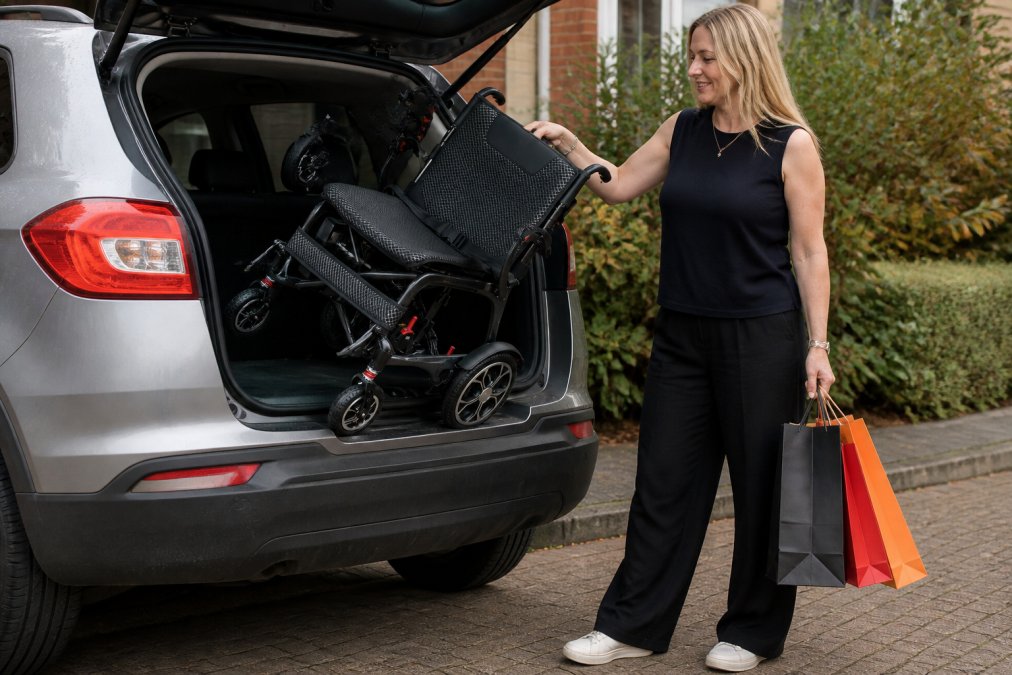
Travel becomes genuinely feasible with carbon fibre. The Evora Carbon weighs just 13 kg and folds to 22 cm wide, narrow enough for most car boots, aeroplane overhead compartments, and caravan storage. A steel equivalent would be 20 kg heavier and far bulkier when folded. For someone who visits family, takes holidays, or uses public transport, that portability difference determines independence.
Users who propel themselves manually experience less shoulder and arm fatigue with lighter frames. Less weight means less energy per push, extending how far you can travel on a single outing. Active users navigating shopping centres, parks, or outdoor spaces consistently report that lightweight chairs let them do more without exhaustion.
Durability, Corrosion Resistance and Structural Integrity
Carbon fibre is naturally corrosion-resistant. It won't rust, degrade in salt water, or develop oxidation from moisture and air. If you live near the coast, use your chair in wet climates, or simply don't want to worry about rust prevention, carbon fibre eliminates that maintenance burden entirely.
Steel requires active corrosion management. Regular wiping, occasional oil or rust-preventative coating, and careful storage keep rust at bay. Neglect this, and within months surface rust appears. Within a year or two, structural rust can compromise frame integrity. For users in humid climates or those with limited ability to maintain equipment, this is a real drawback.
Both materials offer excellent structural integrity when properly engineered. Carbon fibre's tensile strength is higher weight-for-weight than steel, meaning a thinner carbon fibre frame can match or exceed the load-bearing capacity of a thicker steel frame.
However, carbon fibre has one weakness: impact damage. A hard collision can crack the carbon fibre, and unlike steel which bends and can sometimes be straightened, carbon fibre cracks don't repair easily. A bent steel frame can often be welded by a local engineer. A cracked carbon fibre frame typically requires specialist repair or replacement.
Benefits of Carbon Fibre Mobility Aids
Beyond weight reduction, carbon fibre wheelchairs offer several practical advantages justifying their premium price for the right users.
First, vibration dampening. Carbon fibre naturally absorbs vibrations better than steel, providing a smoother ride on uneven surfaces. Users report less jarring when crossing kerbs or navigating cobbled streets. This comfort difference accumulates over hours of daily use.
Second, aesthetic appeal. Carbon fibre has a premium, modern appearance. Many users appreciate that their mobility aid looks contemporary rather than institutional. The Vantage Carbon features a sculpted carbon frame with bronze accents, giving it a sporty presence. This matters psychologically; users report feeling more confident using a chair that looks designed rather than medical.
Third, customisation potential. Carbon fibre's manufacturing process allows more design flexibility in colours, finishes, and frame geometries than steel.
Fourth, longevity. A well-maintained carbon fibre wheelchair lasts 8-12 years without significant degradation (Research on carbon fibre longevity(https://pmc.ncbi.nlm.nih.gov/articles/PMC10961962/)). Steel chairs typically show visible wear and corrosion after 5-7 years. Over a 10-year ownership period, carbon fibre's durability can offset some of its higher initial cost.
Finally, airline compatibility. Most carbon fibre wheelchairs feature removable lithium batteries and lightweight frames meeting airline requirements. If you travel by air, carbon fibre is almost always the better choice.
Lightweight Folding Electric Wheelchairs: Practicality and Real-World Use
For electric wheelchairs, weight becomes even more critical because you're lifting the motor, battery, and control system too. A steel electric wheelchair easily exceeds 35-40 kg. A carbon fibre electric wheelchair stays under 17 kg.
The Firefly weighs just 14.5 kg and costs £849.99, offering electric assistance without the carbon fibre premium. It delivers brushless motor performance and quick-release lithium battery technology at a price significantly lower than full carbon fibre chairs. For active older adults or users in care settings, the Firefly balances affordability and portability.
For those needing the absolute lightest option, the Evora Carbon at 13 kg and £1,249.99 represents current engineering limits. It folds to 22 cm width, Britain's narrowest fold, and pairs dual 250W brushless motors with an airline-friendly removable battery. Users report that the combination of weight and compact folding transforms their ability to travel independently.
Real-world data shows lightweight electric wheelchairs see higher daily usage rates than heavier models. Users who can easily fold and transport their chair use it for more outings and report higher quality of life.
However, lightweight electric wheelchairs impose practical limits. Most are designed for indoor use and smooth outdoor surfaces, not steep hills, rough terrain, or extended off-road use. If your lifestyle includes woodland paths or steep gradients, a heavier chair might be necessary.
Maintenance of Carbon Fibre Wheelchairs vs Steel
Carbon fibre requires minimal maintenance. A soft cloth wipe after use, occasional mild soap and water wash, and you're done. No rust prevention, no coating, no specialist servicing beyond standard motor and battery care.
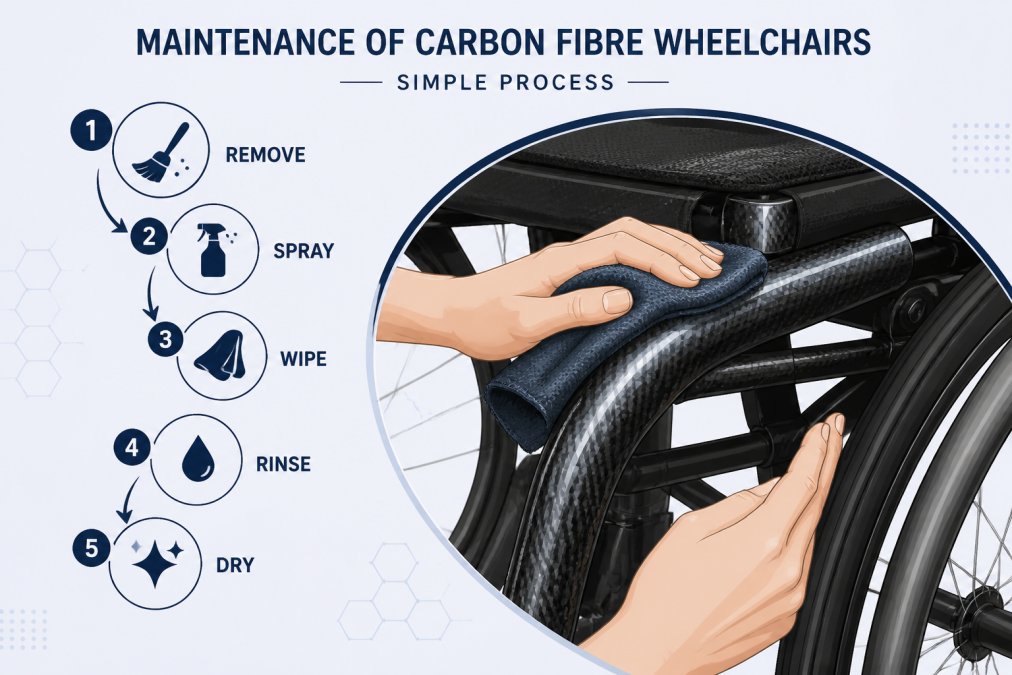
Steel requires active intervention. After wet weather, wipe the frame dry. Periodically inspect for rust spots and apply rust-preventative oil or coating. For users with limited dexterity or busy lives, this maintenance burden is real. Many steel users neglect this, accelerating frame degradation.
Repairability differs significantly. A bent or damaged carbon fibre wheelchair typically requires return to the manufacturer or specialist repair centre, meaning downtime. Steel frames can often be repaired locally, any welding shop can straighten a bent frame or weld a crack. This accessibility is valuable for quick repairs.
Repair costs also differ. A specialist carbon fibre repair costs £200-£400 and takes 2-4 weeks. A local steel frame weld costs £50-£100 and takes a few days. For users on tight budgets or those who can't afford extended downtime, steel's repairability advantage is significant.
Battery and motor maintenance is identical for both materials.
Cost Analysis: Investment and Long-Term Value
The upfront price gap is substantial. Steel costs £400-£700; carbon fibre costs £1,200-£1,400. That's a premium of £500-£800.
However, the long-term picture is more complex. Consider a 10-year ownership scenario:
A steel chair at £500 requires rust prevention and maintenance supplies (roughly £30-50 annually), occasional repairs (£100-200 every 2-3 years), and likely replacement within 7-8 years due to corrosion. Total 10-year cost: roughly £1,200-£1,500.
A carbon fibre chair at £1,250 requires minimal maintenance (£0-10 annually) and specialist repair only if damaged. If it lasts the full 10 years without major damage, total cost is £1,250-£1,350.
The maths aren't dramatically different, but they tell a story: carbon fibre's higher upfront cost is partly offset by lower maintenance and longer lifespan. The real financial advantage comes if you keep the chair longer than 10 years or use it intensively.
For caregivers, there's an indirect cost benefit to carbon fibre. Reduced lifting strain means lower risk of caregiver injury, potentially avoiding medical costs, lost work time, or additional care support.
The Atlas HD Carbon at £1,395.99 represents premium pricing for heavier users (150 kg capacity). At 16.2 kg, it's remarkably light for a heavy-duty chair, justifying the cost for larger users who would otherwise face 30+ kg steel alternatives.
Which Material Is Right for You?
The decision hinges on five factors: how often you lift your chair, how long you plan to keep it, your budget, your environment, and your repair accessibility.
Choose carbon fibre if:
- You lift your wheelchair regularly (multiple times weekly)
- You travel by car, public transport, or aeroplane
- You have shoulder, wrist, or back pain aggravated by lifting
- You live in a humid, coastal, or wet climate
- You plan to use your chair for 8+ years
- You're a caregiver managing multiple lifts daily
- You need the chair to fit into tight storage spaces
The Evora Carbon at £1,249.99 is the benchmark for this profile. Its 13 kg weight and 22 cm fold width are industry-leading, and the 250W brushless motors deliver responsive performance for indoor and smooth outdoor use.
Choose steel if:
- Your chair stays primarily in one location
- You have someone to help with lifting
- Budget is your primary constraint
- You want easy local repair access
- You don't mind routine maintenance
- You navigate rough terrain or steep gradients regularly
Steel chairs excel in institutional settings and situations where portability isn't critical.
The hybrid approach: Consider the Vantage Carbon at £1,395.99 if you want both powered and manual options. Its large wheels and dual-mode operation give you flexibility. If the battery fails, you can still propel yourself manually. For budget-conscious users wanting electric assistance without the full carbon fibre premium, the Firefly at £849.99 bridges the gap. At 14.5 kg it delivers most weight benefits at roughly two-thirds the carbon fibre price.
The choice between carbon fibre and steel wheelchairs is about matching your material to your lifestyle. Carbon fibre delivers weight reduction, durability, and long-term value for active users who lift their chairs regularly and travel frequently. Steel offers affordability and local repair accessibility for users whose chairs stay relatively stationary.
At Etech Mobility, we're committed to helping you find the right solution. Our carbon fibre range, from the ultra-portable Evora Carbon to the heavy-duty Atlas HD Carbon, is designed for users who refuse to let weight or storage limit their independence. Our team can guide you through the decision based on your specific circumstances, and we offer free UK delivery on all models. Contact us today to discuss which wheelchair material is right for your lifestyle, and we'll help you choose a chair that works with your life, not against it.
Frequently Asked Questions
Is carbon fibre really better than steel for wheelchairs?
Carbon fibre offers significant advantages for active users: it weighs 30-40% less than steel, resists corrosion naturally, and requires minimal maintenance. Steel is heavier but more affordable and durable for rough use. The best choice depends on your lifestyle, carbon fibre suits frequent travellers and those needing easy lifting; steel works for users with budget constraints who don't prioritise portability. Both materials meet safety standards and can last many years with proper care.
What are the main weight differences between carbon fibre and steel wheelchairs?
Carbon fibre wheelchairs typically weigh 13-16 kg, whilst comparable steel models weigh 18-25 kg or more. This 5-10 kg difference significantly impacts propulsion efficiency and fatigue factor, lighter chairs require less energy to move and are easier to fold, lift and transport. For users with limited shoulder strength or those who travel frequently, this weight saving directly reduces user fatigue and improves daily independence.
Are carbon fibre wheelchairs more durable than steel?
Both materials are durable when properly maintained. Carbon fibre offers superior corrosion resistance and doesn't rust, making it ideal for humid environments or frequent outdoor use. Steel is heavier but can withstand rough handling better. Carbon fibre's tensile strength and impact resistance are excellent for everyday use, though repairs require specialist knowledge. Steel is easier and cheaper to repair. For long-term reliability, carbon fibre typically outlasts steel in coastal or wet climates.
What are the maintenance requirements for carbon fibre vs steel frames?
Carbon fibre requires minimal maintenance: regular cleaning with a damp cloth and occasional inspection for cracks. It doesn't rust or corrode. Steel requires more frequent care, regular cleaning to prevent rust, occasional lubrication of moving parts, and protective coating if exposed to moisture. Carbon fibre's lower maintenance burden saves time and money over the wheelchair's lifetime, particularly for active users who travel or use their chair outdoors regularly.