
How to Choose a Folding Electric Wheelchair
Table of Contents
- Assess Your Daily Mobility Needs
- Evaluate Indoor Versus Outdoor Usage Requirements
- Understanding Folding Mechanisms and Portability
- Battery Life, Charging and Drive Range
- Carbon Fibre Electric Wheelchair Benefits
- Electric Wheelchair Dimensions for Public Transport
- VAT Relief on Mobility Equipment and Long-Term Costs
- Frequently Asked Questions
Last Updated: October 6, 2026
Assess Your Daily Mobility Needs
Choosing a folding electric wheelchair for daily use starts with understanding what your body actually needs, not what sounds good in marketing copy. The difference between a reliable companion and a chair gathering dust comes down to matching the device to your real life. (Source: disability living allowance)
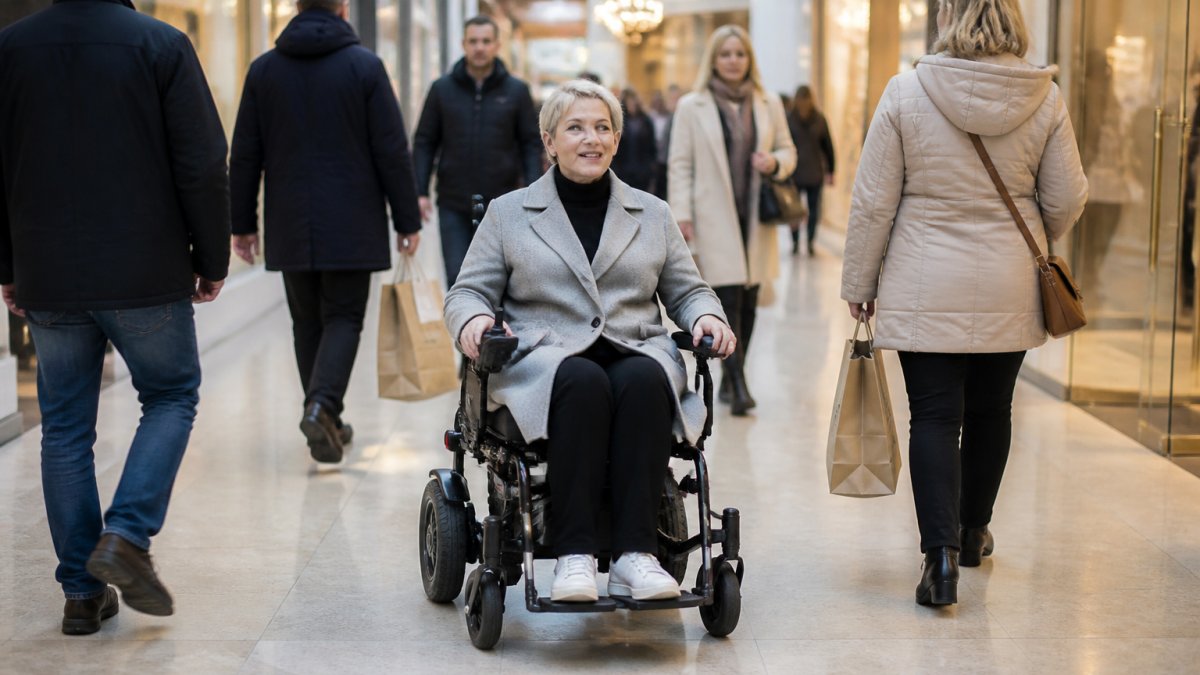
Your first step is honest self-assessment. How far do you travel in a day? Are you moving around your home, popping to the shops, or managing longer outings? Do you have stairs, narrow doorways, or uneven surfaces to navigate? These details determine whether a powerchair becomes part of your independence or a source of frustration.
Consider your physical capacity too. Can you operate a joystick controller with precision, or do you need something more forgiving? Do you have the grip strength to fold a manual mechanism, or does an automatic folding system matter? Track a typical week: where you go, how long you're out, and what surfaces you encounter.
Weight capacity is another practical consideration. Most folding electric wheelchairs support 120 kg. If you're at or near a chair's limit, performance suffers: motors work harder, battery range drops, and the frame experiences more stress. Being honest now prevents disappointment later.
Think about who else might help you. If a partner or carer will lift the chair into a vehicle, their strength matters. A 12 kg magnesium frame like the MagNeo is manageable for most people; a 15 kg aluminium chair requires more effort. If you're lifting alone, weight becomes critical.

Evaluate Indoor Versus Outdoor Usage Requirements
Indoor and outdoor mobility demand different things from a powerchair, and most users need both. A chair optimised purely for indoor use will struggle on pavements and grass. One built for rough terrain might be cumbersome indoors.
Indoor maneuverability depends on turning radius and width. Most folding electric wheelchairs have a turning radius of around 60-80 cm, which works in most homes. Before buying, measure your doorways and the tightest spaces you navigate daily. A chair that won't fit through your bathroom door is worthless, no matter how good it is elsewhere. Ensuring your living environment accommodates these dimensions is a fundamental step toward creating a truly wheelchair accessible home.
Outdoor performance hinges on ground clearance, suspension, and wheel size. Pavements, gravel paths, and grass demand wheels that won't get stuck on kerbs or sink into soft ground. The Horizon 7 uses pneumatic rear wheels with all-round suspension. The Aeron, with front and rear wheels, handles flat outdoor areas well.

Many users split the difference: a lightweight indoor chair for home, paired with a rugged model for outings. That's practical if you have space and budget. For single-chair solutions, look for suspension systems and larger rear wheels.
Battery performance varies between indoor and outdoor use. Smooth, flat surfaces consume less power; grass, gravel, and slopes drain batteries faster. If outdoor use is regular, a model with expandable battery capacity, like the Horizon 7's twin-slot design, lets you extend range when needed.
Understanding Folding Mechanisms and Portability
The folding mechanism is where theory meets daily reality. A chair that's difficult to fold becomes one you avoid folding, defeating the purpose of buying a folding model.
Manual folding is straightforward but requires physical effort: press levers, collapse the frame, store it. The MagNeo folds to just 35 cm tall, the flattest fold in its range, sliding into small car boots. The Aeron folds more conventionally. Both work, but manual folding demands grip strength and shoulder mobility. If you have arthritis or limited upper-body strength, this becomes a real barrier.

Automatic folding removes that barrier entirely. The Freedom Pro AF folds and unfolds with a remote control: press a button and the chair collapses, no strain or struggle. This is valuable for users who might otherwise avoid folding out of pain.
Portability depends on folded dimensions and weight together. A 12 kg chair that folds flat is genuinely portable; a 16 kg chair that folds bulkily is portable only in theory. Consider how you'll transport it: car boot, public transport, or carried by hand. Measure your car boot before buying, as many users discover their new wheelchair doesn't fit their vehicle.
Quick-release batteries improve portability significantly. The MagNeo's dual airline-friendly batteries detach instantly, so you can store the chair in your car and carry the batteries inside to charge. This eliminates the heaviest single component from the lifting task.
| Folding Type | Effort Required | Best For | Trade-off |
|---|---|---|---|
| Manual fold | Moderate grip strength | Users with good upper-body mobility | Requires physical effort each use |
| Automatic fold | Button press only | Users with limited strength or arthritis | Heavier, more complex mechanics |
| Quick-release battery | Reduces total lift weight | All users | Requires managing two components |
Battery Life, Charging and Drive Range
Battery performance determines whether your chair supports your actual lifestyle or limits it. This is where honest assessment matters most.
Real-world drive range depends on terrain, user weight, speed, and battery capacity. The Aeron genuinely delivers around 20 miles on smooth surfaces with its dual 24V batteries. The Horizon 7 starts with a single 24V battery but can expand to dual batteries, roughly doubling range.
Charging time varies. Most lithium-ion batteries charge fully in 4-6 hours. Some faster chargers reduce this to 2-3 hours. If you're out daily, overnight charging works. If you need mid-day top-ups, charging speed matters. Batteries that charge on or off the chair offer flexibility, you can swap a depleted battery for a charged one without waiting.
Quick-release batteries solve battery anxiety. Knowing you can swap a depleted battery for a charged spare removes the fear of being stranded. The MagNeo's dual airline-friendly batteries work this way: carry two, use one, swap when needed.
(Source: The Equality Act 2010)
Carbon Fibre Electric Wheelchair Benefits
Carbon fibre represents the premium end of lightweight powerchair design, engineered for durability and performance that other materials struggle to match.
Carbon fibre is stronger than aluminium at a fraction of the weight. Magnesium is lighter still. Carbon fibre frames maintain structural integrity under stress while minimising weight. This matters when you're lifting a chair repeatedly or navigating rough terrain where frame flex causes instability.
The real benefit emerges in everyday use. A lighter frame means less effort to lift, less strain on shoulders and back, and less fatigue during transport. If you're lifting your chair multiple times daily, that weight difference compounds into the difference between independent transport and needing help.
MagNeo – 12.3kg Ultra-Lightweight Magnesium Electric Wheelchair →
Durability is where carbon fibre earns its cost. The material resists corrosion, doesn't dent like aluminium, and maintains structural integrity longer.
Etech Mobility's carbon fibre range prioritises this balance: genuine lightweight construction without sacrificing durability. The MagNeo uses magnesium for extreme lightness. Both work.
Electric Wheelchair Dimensions for Public Transport
Public transport compliance is often overlooked until you need it. A wheelchair that doesn't fit through train doors or bus lifts is theoretically portable but practically useless for transit.
Folded dimensions matter most. Most UK trains accept folded wheelchairs in designated spaces, and buses with lifts typically accommodate folded chairs. Aircraft have tighter restrictions.
The MagNeo's 35 cm folded height is exceptional, sliding under seats or into overhead spaces. Most other models fold to 45-55 cm tall, which still fits but requires more deliberate placement. Narrow folded profiles fit through tight spaces more easily.
Unfolded dimensions determine whether you can navigate a bus or train aisle. Most public transport corridors are 70-80 cm wide, and most folding wheelchairs are 60-70 cm wide unfolded, so they fit, but barely. Test this before committing.
Airline travel has specific rules. The International Air Transport Association allows folded wheelchairs in cabin baggage if they meet size and weight limits. Most folding electric wheelchairs comply, but check with your airline before booking. Lithium batteries have restrictions. The MagNeo's airline-friendly batteries are designed for this.
Weight limits for aircraft vary. If you travel frequently, weight becomes a practical constraint.
Public transport staff aren't always familiar with electric wheelchairs. A folded chair that fits standard luggage dimensions avoids confusion, and a compact, lightweight chair signals "I can manage this" to staff and fellow passengers.
VAT Relief on Mobility Equipment and Long-Term Costs
VAT relief is a genuine financial benefit, but only if you understand the rules and claim it correctly.
If you're eligible, you can purchase mobility equipment without paying VAT (Financial help if you're disabled: VAT relief for disabled people). The application process requires documentation.
Eligibility requires proof of disability: evidence from your GP, occupational therapist, or official disability assessment. The process isn't automatic, so you must apply through the VAT relief scheme with supporting documentation. Some retailers, including Etech Mobility, can guide you through the application and process claims on your behalf.
Not all wheelchairs qualify. The relief applies to mobility aids used by disabled people for personal mobility. Check with the retailer or HM Revenue & Customs if you're uncertain.
Long-term costs extend beyond the initial purchase. Tyres wear out, especially on rough surfaces. Brushless motors are virtually maintenance-free, but joystick controllers occasionally need repair or replacement.
Warranty coverage matters. Etech Mobility includes a 1-year warranty and free UK delivery, reducing upfront costs.
Insurance is optional but worth considering if your chair is expensive. Contents insurance might cover it, but specific mobility equipment insurance offers better protection.
Choosing a folding electric wheelchair is fundamentally about matching the device to your actual life, not the life you think you should have. Etech Mobility's range, from the ultra-lightweight MagNeo at 12.3 kg to the all-terrain Horizon 7, offers genuine options for different needs.
Start by assessing your real mobility needs: distance, terrain, and lifting capacity. Test folding mechanisms on chairs you're considering, don't rely on demonstrations. Verify public transport compatibility if you travel. Investigate VAT relief eligibility; it's free money if you qualify. Get in touch with Etech Mobility's team for personalised guidance.
Frequently Asked Questions
What features should I look for in a folding electric wheelchair for daily use?
Prioritise weight capacity (most models support 120 kg), turning radius for indoor maneuverability, battery range for your typical daily distance, seat comfort and backrest angle adjustment, and folding dimensions that fit your car boot. Check that the joystick controller is intuitive and the frame uses durable materials like aluminium or magnesium. Brushless motors require virtually no maintenance, whilst quick-release batteries make charging more convenient. Look for IPX4 water resistance for outdoor reliability.
How do I know if a folding electric wheelchair will fit through my home's doorways and corridors?
Measure your narrowest doorway width and corridor space, then compare those dimensions to the wheelchair's folded width and overall width when in use. Most folding powerchairs have a folded depth of 35-40 cm and operating widths around 60-65 cm. Request the exact dimensions from the supplier before purchasing. If your home has very narrow corridors or doorways under 75 cm, test the model in your space first or ask about a trial period to ensure it suits your home layout.
Will I be able to fold and lift a folding electric wheelchair myself if I have arthritis or limited upper body strength?
Weight matters significantly here. Ultra-lightweight models like magnesium-frame chairs at 12.3 kg are far easier to lift than heavier aluminium options at 15+ kg. However, if you have arthritis or shoulder pain, consider automatic folding models with remote control, which eliminate manual folding effort entirely. Alternatively, ask whether a caregiver or family member can assist with folding and lifting. Some users find that storing the chair already folded in the boot reduces daily handling strain considerably.
Are folding electric wheelchairs suitable for use on public transport?
Yes, many folding powerchairs are designed for public transport compliance. Check that the model has quick-release, airline-friendly batteries and folds to dimensions that fit train and bus luggage spaces. Most trains and coaches accept folded wheelchairs in designated spaces. Some models meet airline carry-on restrictions, though you should confirm with your airline before travel. Verify the folded dimensions (typically 35-40 cm tall) match your transport provider's requirements, and always inform staff that you're travelling with a powerchair.