
Is a Lightweight Folding Wheelchair Worth It?
Table of Contents
- What Makes a Lightweight Folding Wheelchair Different
- Portability and Travel Convenience
- Carbon Fibre Electric Wheelchair Benefits
- Total Cost of Ownership: The Real Investment
- VAT Relief on Mobility Aids and Financial Support
- Best Lightweight Folding Wheelchair for Travel
- Durability, Warranty and Long-Term Reliability
- Independence and Quality of Life
- Frequently Asked Questions
Last Updated: October 3, 2026
What Makes a Lightweight Folding Wheelchair Different
A lightweight folding wheelchair combines portability and powered mobility, offering independence without the bulk of traditional electric wheelchairs.
Standard electric wheelchairs weigh 30-40kg, making them difficult to transport. Lightweight models use magnesium alloy or carbon fibre frames to cut this weight dramatically. The MagNeo weighs just 12.3kg and folds to 35cm tall, fitting most car boots without a hoist.

These chairs maintain powered mobility benefits; users control speed and direction via joystick rather than pushing manually. For people with limited upper-body strength, arthritis, or progressive conditions, this enables independent errand management.
A lightweight folding wheelchair isn't a performance compromise. Modern designs use dual batteries, brushless motors, and responsive joysticks for smooth, reliable control. The question is whether the investment aligns with your lifestyle and needs.
Portability and Travel Convenience
A lightweight folding wheelchair transforms travel by sliding into most car boots without modification, unlike standard powerchairs that require ramps or hoist systems.
For regular travellers, this eliminates dependence on accessible transport or family assistance. The Aeron, at 15.4kg with large wheels for outdoor stability, folds neatly and can be handled by most adults without strain.

Many lightweight models feature quick-release batteries complying with aviation regulations. The MagNeo's dual airline-friendly batteries let you remove them, charge separately, and reassemble at your destination.
A folded lightweight model stands upright in a corner or slides under a bed, making powered chairs feasible for people in flats, care homes, or shared accommodation.
Buses, trains, and taxis often accommodate compact folded models, expanding independence beyond car travel.
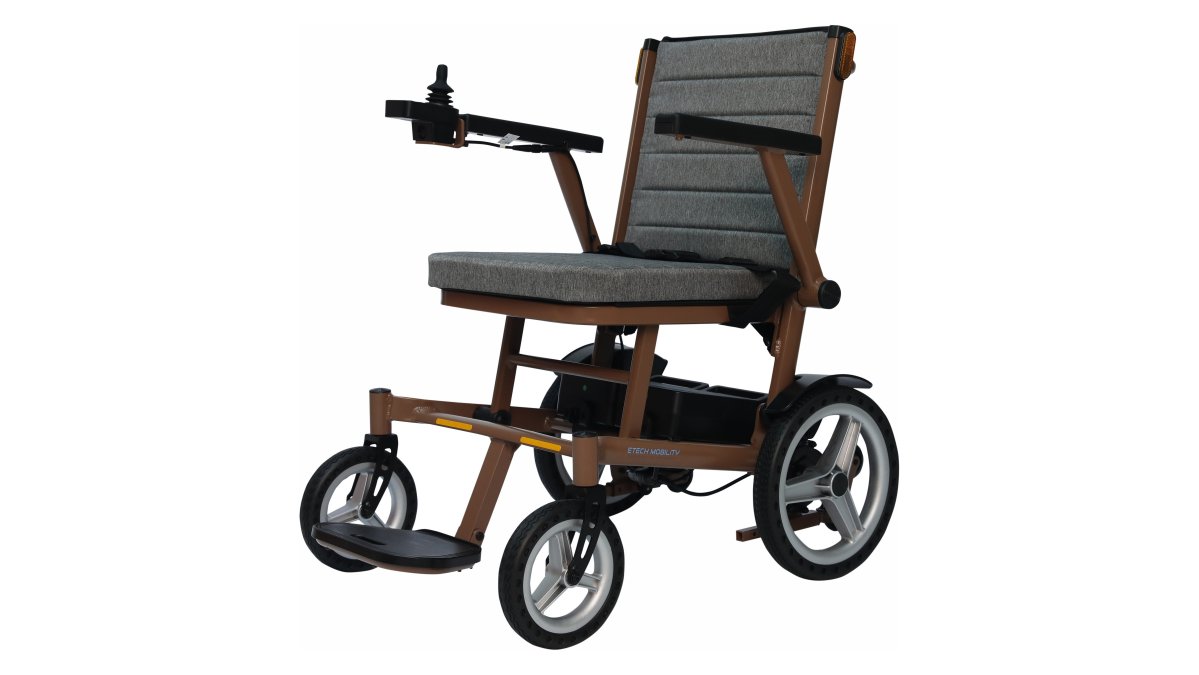
Carbon Fibre Electric Wheelchair Benefits
Carbon fibre offers exceptional strength-to-weight ratio, delivering durability without bulk.
Magnesium alloy, used in the MagNeo, is lighter than aluminium yet strong enough for everyday use. At 12.3kg, it supports users up to 120kg and includes electromagnetic braking and IPX4 water resistance.
Premium materials combined with quality engineering ensure reliability for years. Etech Mobility's products are certified to BS EN 12184:2022 (Class 2) with a 1-year warranty.
A lighter chair manoeuvres more easily through narrow doorways and crowded spaces. The LiteMax 2, at 19.8kg with 58cm width, balances stability with manoeuvrability for active users.
Lighter frames extend battery range. The Converge 180 uses dual 250W brushless motors, and its lighter weight extends range compared to traditional models.

Total Cost of Ownership: The Real Investment
Price is often the first barrier people encounter. A lightweight folding wheelchair from Etech Mobility ranges from £794.99 for the LiteMax 2 to £1,599.99 for the Converge 180. These figures are significantly higher than basic manual wheelchairs, which cost £200-500.
The real question isn't the upfront cost, it's what you're paying for over time. A standard manual wheelchair requires physical effort that, for many users, causes pain, fatigue, or worsening of existing conditions. Over five years, the cumulative cost of managing that strain, physiotherapy, pain relief, and potential injury, often exceeds the price of a powered alternative.
Maintenance costs differ too. Manual wheelchairs need regular tyre repairs, brake adjustments, and frame maintenance. Electric models require battery replacement every 2-3 years (typically £150-300) and occasional motor servicing. For most users, annual maintenance costs remain modest, often under £100 for battery checks and minor repairs.
Durability affects long-term value significantly. A poorly made lightweight wheelchair might fail within 2-3 years, forcing replacement. A well-engineered model like those from Etech Mobility, built with premium materials and certified to British standards, often functions reliably for 5-7 years. That longevity reduces your cost per year of use dramatically.
Resale value matters too. Quality lightweight wheelchairs hold value better than budget alternatives. If your needs change, you improve, or you require a different model, you can recover 40-60% of your investment through resale, whereas a cheap chair might recoup only 10-20%.
There's also the independence factor. A wheelchair that enables you to manage shopping, social visits, and errands independently reduces reliance on caregiving support. For some users, that translates directly to cost savings; for others, it's invaluable simply because it preserves autonomy.
VAT Relief on Mobility Aids and Financial Support
People often don't realise that mobility aids may qualify for VAT relief in the UK. If you're disabled and need a wheelchair for personal mobility, you may be eligible to purchase it VAT-free (Get VAT relief on certain goods if you have a disability). This can represent a significant saving, roughly 20% off the purchase price.
To qualify, you typically need to be registered with your local authority as a disabled person, or have a letter from your GP or occupational therapist confirming that the wheelchair is essential for your mobility. Different suppliers have different processes, so it's worth asking whether your chosen provider can facilitate this.
Some people also qualify for support through their local NHS wheelchair service. If you meet eligibility criteria, you can receive a wheelchair at no cost or significantly reduced cost. However, NHS wheelchairs are often standard models rather than the latest lightweight options. (Source: BS EN 12184:2022 standards)
Personal Independence Payment (PIP) or Disability Living Allowance (DLA) can sometimes be used toward mobility equipment, though eligibility varies. It's worth discussing your situation with your provider; Etech Mobility's team can advise on what support you might access and how to navigate the application process.
Employer support schemes and charitable grants also exist for people in employment or facing financial hardship. Exploring these options before purchase can substantially reduce your out-of-pocket cost.
MagNeo – 12.3kg Ultra-Lightweight Magnesium Electric Wheelchair →
Best Lightweight Folding Wheelchair for Travel
Choosing the right model depends on your specific travel needs and physical capabilities. For frequent air travel, the MagNeo's dual airline-friendly batteries make it the strongest choice; you remove the batteries, pack them separately, and fly without complications. At 12.3kg, it's light enough for most people to lift unaided, and it folds to just 35cm tall.
For mixed indoor-outdoor use with larger users, the Converge 180 offers something different: it splits into two sections, with the main frame weighing 16kg when separated from the motor section. This design lets you lift and load manageable pieces rather than one heavy assembly. It also supports users up to 180kg, making it suitable for a wider range of body types.
The Aeron suits people prioritising outdoor stability. Its front and rear wheels provide confident handling on pavements and park surfaces. At 15.4kg, it's heavier than the MagNeo but still portable, and its price point (£849.99) makes it accessible for users on tighter budgets.
For those concerned about folding mechanisms, particularly people with arthritis or limited hand strength, the LiteMax 2 offers an intuitive design at 19.8kg. Its extended footplate and choice of battery options (12Ah standard or 20Ah for extended range) mean you can tailor performance to your needs.
The decision ultimately rests on three factors: your physical capability to lift and handle the chair, your primary use case (urban travel, holiday flights, or daily local use), and your budget. Etech Mobility's team can guide you through these considerations and help you find the model that genuinely fits your lifestyle rather than compromising on what matters most.
Durability, Warranty and Long-Term Reliability
A lightweight wheelchair is only worth the investment if it lasts. Cheap models often fail within 2-3 years; quality engineering extends that to 5-7 years or longer with proper maintenance.
Etech Mobility's products are certified to BS EN 12184:2022 (Class 2), a British standard that defines safety and performance requirements for powered wheelchairs. This certification isn't marketing; it means the chair has passed rigorous testing for structural integrity, braking performance, and electrical safety.
Beyond the warranty period, reliability depends on build quality and maintenance. Brushless motors, used in Etech Mobility's range, are virtually maintenance-free compared to brushed alternatives. They generate less heat, last longer, and require no carbon brush replacement. This translates to lower servicing costs and fewer unexpected failures.
Battery longevity is often the limiting factor. Most lithium batteries degrade gradually, losing capacity over time. After 2-3 years of regular use, you might notice reduced range, perhaps 15-20% less distance per charge. Replacement batteries typically cost £150-300, depending on capacity.
Frame durability depends on material choice. Magnesium alloy, used in the MagNeo, resists corrosion and maintains structural integrity through years of daily use. Aluminium, used in the Aeron, is equally durable and slightly more affordable.
Water resistance matters for reliability. Most Etech Mobility models include IPX4 water resistance, meaning they handle light rain and splashes without electrical damage. This allows you to use your chair in real-world conditions, shopping in the rain, navigating wet pavements, without constant worry about electronics failing.
Regular maintenance extends lifespan significantly. Annual checks of brakes, motors, and battery connections catch problems early. Keeping the chair clean and dry when not in use prevents corrosion. Following the manufacturer's guidance on charging cycles optimises battery health. These simple practices often add 2-3 years to your wheelchair's functional life.
Independence and Quality of Life
The most important measure of whether a lightweight folding wheelchair is worth the investment isn't financial; it's how it changes your daily life. For many users, it's transformative.
A powered wheelchair removes the physical strain of manual propulsion. People with arthritis, muscle weakness, or progressive conditions often find that a manual chair causes pain or fatigue that limits how far they can travel.
Portability enables social participation. When your wheelchair fits in a car boot, you can visit friends, attend events, and explore new places without requiring specialist transport or extensive planning. Holidays become possible again. Spontaneous outings become feasible.
For caregivers, a lightweight folding wheelchair reduces strain too. Lifting a 40kg standard chair into a vehicle can cause back injuries; a 15kg model is manageable.
Employment becomes more feasible. People who use wheelchairs often cite accessibility and transport as barriers to work. A lightweight, portable model reduces those barriers significantly. You can commute independently, navigate office spaces, and manage the logistics of working life without constant accommodation requests.
Confidence and self-perception shift too. Users often report feeling more in control, more capable, and less dependent. That psychological shift, from viewing yourself as limited to viewing yourself as equipped, affects how you approach daily life and long-term planning.
These aren't intangible benefits. They translate directly into better health outcomes, lower rates of depression and anxiety, stronger social connections, and greater participation in community life. For many people, that's precisely what makes a lightweight folding wheelchair worth the investment.
Whether a lightweight folding wheelchair represents good value depends on your specific circumstances, but for most people facing mobility challenges, the answer is yes. The combination of portability, reliability, and independence addresses real barriers that standard wheelchairs don't solve.
Frequently Asked Questions
Are lightweight folding wheelchairs VAT exempt for disabled users?
Yes, lightweight folding wheelchairs can qualify for VAT relief under the VAT relief on mobility aids scheme. To claim relief, the wheelchair must be designed for disabled people and purchased by or on behalf of a disabled person. You'll need to provide evidence of disability, such as a letter from your GP or occupational therapist. Relief applies to the purchase price, reducing the overall cost. Check with your supplier about their VAT relief process, as eligibility depends on meeting specific criteria.
What is the best lightweight folding wheelchair for travel?
The best choice depends on your strength and travel frequency. The MagNeo (12.3kg) is the lightest option available, folding to just 35cm and ideal if you lift the wheelchair yourself frequently. The Aeron (15.4kg) offers larger wheels for outdoor stability at a lower price point. For those with higher weight capacity needs, the Converge 180 (16kg main section when split) combines portability with 180kg capacity. All feature airline-friendly batteries and fold compactly for car travel.
How much does a lightweight folding wheelchair typically cost compared to standard models?
Lightweight folding electric wheelchairs range from £794.99 to £1,599.99 depending on materials and features. The LiteMax 2 at £794.99 offers excellent value for everyday use. The Aeron at £849.99 provides larger wheels for outdoor comfort. Premium options like the MagNeo (£999.99) use magnesium for maximum lightness, whilst the Converge 180 (£1,599.99) combines ultralight portability with heavy-duty capacity. Standard manual wheelchairs cost less upfront but lack the convenience and range of electric models.
Will I be able to fold and lift a lightweight wheelchair myself if I have arthritis or limited upper body strength?
Folding difficulty depends on the model and your specific strength. Lightweight models like the MagNeo (12.3kg) are designed to be lifted by one person, but arthritis can make this painful. Some models feature quick-release mechanisms that reduce the force needed. Consider asking a healthcare professional or occupational therapist to assess your capabilities before purchasing. Many suppliers, including Etech Mobility, offer personalised guidance to match you with a chair suited to your physical abilities.