
Power Wheelchair Weight Capacity Explained (2026 Guide)
Table of Contents
- Power Wheelchair Weight Capacity Explained: What the Numbers Really Mean
- Power Wheelchair Weight Limit: Standard vs Heavy-Duty Ranges
- Electric Wheelchair Weight Capacity and Frame Construction
- Power Wheelchair Range and User Weight: How Load Affects Performance
- Choosing a Lightweight Folding Electric Wheelchair With the Right Capacity
- How to Choose the Right Weight Capacity for Your Needs
- Frequently Asked Questions
Last Updated: October 12, 2026
Power Wheelchair Weight Capacity Explained: What the Numbers Really Mean
Power wheelchair weight capacity is the maximum total weight a chair is engineered to carry safely, covering the user plus everything they place on the chair. At Etech Mobility, we see the same confusion repeatedly: buyers treat the number on the spec sheet as a target to hit rather than a ceiling to stay under. That mistake costs people money, comfort, and sometimes their safety.
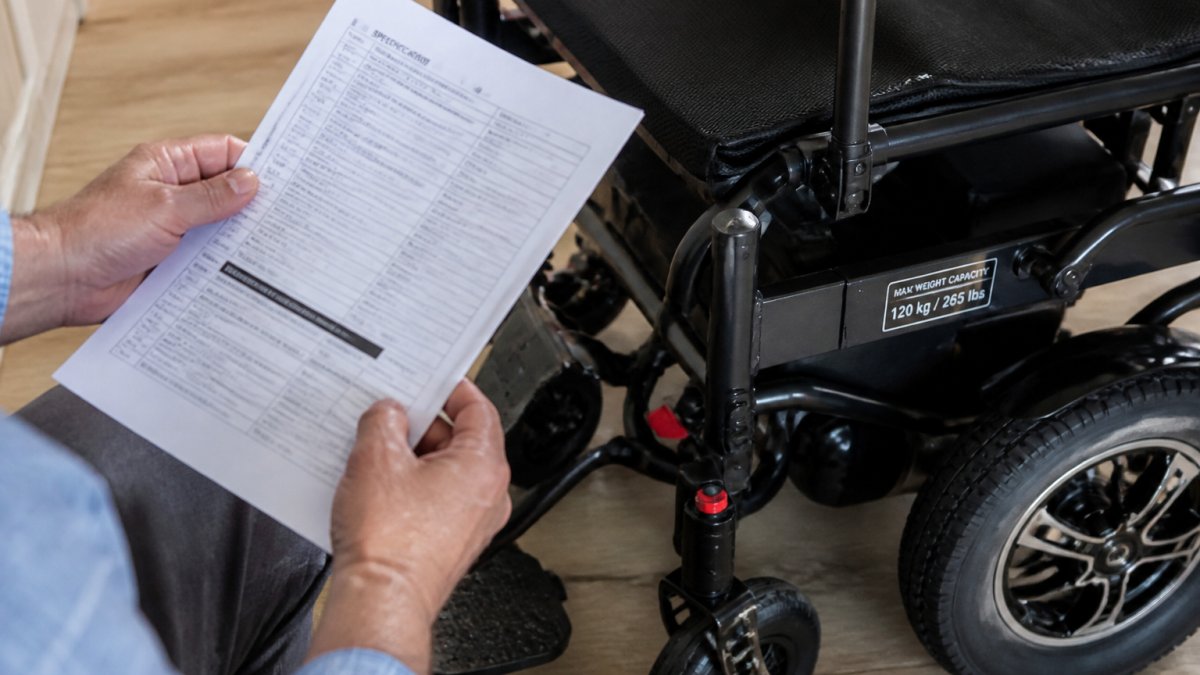
Most manufacturer ratings describe the maximum user weight, not the maximum load the frame can bear. Those are different figures, and the gap between them matters more than most buyers realise.
Maximum User Weight vs Total Load
Maximum user weight is the heaviest person the chair is designed to carry. Total load is that person plus bags, oxygen cylinders, cushions, and anything else on board.
A chair rated at 180kg for the user is not rated at 180kg for the user and their shopping. Add a 5kg bag and a heavier cushion and you may already be pushing the frame past its intended working range. The rating assumes the user alone.
How to Interpret Manufacturer Ratings
Manufacturer ratings describe tested limits under controlled conditions, not a guarantee for every surface and gradient. A rating earned on level ground does not automatically transfer to a steep ramp or rough pavement.
When you read a spec sheet, check three things: whether the figure is user weight or total load, what terrain it was tested on, and whether accessories change it. If any of those are unclear, ask before you buy.
Power Wheelchair Weight Limit: Standard vs Heavy-Duty Ranges
Standard power chairs generally suit lighter users, while heavy-duty and bariatric models are built for higher maximum user weights. The difference is not just the number; it is the frame, motor, and tyre specification behind it.
Typical Capacity Bands by Chair Type
Capacity bands vary by manufacturer, but the pattern is consistent. Lighter folding chairs cluster at the lower end, and heavy-duty models sit well above them.
| Chair Type | Typical User Capacity | Best For |
|---|---|---|
| Lightweight folding | Lower range | Travel, car transport, occasional use |
| Standard power chair | Mid range | Daily indoor and pavement use |
| Heavy-duty | Higher range | Larger users, daily outdoor use |
| Bariatric | Highest range | Users needing maximum support and width |
Our own range illustrates how wide that spread can be. The Vanguard 200 carries up to 200kg, while the Voyager 185 is rated to 185kg. Both fold, but they are built for different users.


What Happens If You Exceed the Limit
Exceeding the rated capacity accelerates wear on the frame, motors, and battery, and it can compromise braking and stability. The chair may still move, which is exactly what makes overloading dangerous: nothing feels wrong until something fails. Maintaining the structural integrity of your mobility equipment is just as vital as ensuring your home environment remains safe, particularly when planning accessible shower modifications to accommodate your daily routine.
The risks stack up:
- Frame stress points fatigue faster and can crack
- Motors run hotter and drain the battery quicker
- Braking distance increases on declines
- Stability margins shrink on slopes and kerbs
Electric Wheelchair Weight Capacity and Frame Construction
Electric wheelchair weight capacity is determined by the frame, not the motor alone. A powerful motor on a weak frame simply transfers stress to the part least able to take it.
Frame Materials and Strength
Aerospace-grade aluminium alloys such as AL6061 are common in premium frames because they balance strength and low weight.
The Enterprise 200 uses an AL6061 aluminium frame rated to 200kg, which shows how a well-designed alloy frame can carry heavy loads without the bulk of older steel designs.

Motors, Tyres, and Carrying Capacity
Motor power and tyre size work together to move load safely. Sine-wave brushless motors deliver smoother torque, and larger tyres spread the load and handle uneven surfaces better.
The Vanguard 200 pairs twin 300W brushless motors with 12-inch solid rear tyres and 8-inch front tyres, a combination aimed at stability across everyday outdoor terrain rather than just flat floors.
Power Wheelchair Range and User Weight: How Load Affects Performance
Power wheelchair range and user weight are directly linked: the heavier the total load, the more energy each journey consumes. A chair that manages a long range with a light user will not match that figure with a heavy one.
Vanguard 200 – Heavy-Duty Bariatric Folding Electric Wheelchair with 45° →
Manufacturers quote range under ideal conditions. Real-world range drops with weight, hills, cold weather, and battery age. Treat the stated figure as a best case, not an average.
Battery Drain on Inclines and Uneven Terrain
Inclines and rough ground are where load really shows. Climbing a slope with a heavy user draws far more current than cruising on the flat, and repeated climbs shorten the distance you get per charge.
Battery age compounds this. An older battery holds less charge and delivers it less efficiently, so a chair that once covered a long route may fall well short after a couple of years. If range matters to you, plan around the worst case, not the brochure figure.
Choosing a Lightweight Folding Electric Wheelchair With the Right Capacity
A lightweight folding electric wheelchair with the right capacity gives you portability without sacrificing the strength you need. The trick is matching the capacity band to your actual weight plus a sensible margin.
Safety Margins and Seating Fit
A safety margin means choosing a chair rated above your weight rather than exactly at it. A margin absorbs the extra load of bags, cushions, and the occasional heavier day, and it reduces strain on every component.
Seating fit matters just as much. A wider seat spreads pressure and improves comfort, but it also affects the chair's overall dimensions and whether it fits through your doorways. The Enterprise 200 offers a 53cm seat, while the Voyager 185 comes in 47cm or 56cm options.
For buyers who need to lift the chair into a car, the Converge 180 splits into sections, with a 16kg main lifting weight, while still carrying up to 180kg. That combination of high capacity and manageable lifting weight is rare, and it is exactly what many of our customers ask for.
How to Choose the Right Weight Capacity for Your Needs
Choosing the right capacity comes down to four checks: your weight, your total load, your terrain, and your lifting limits.
- Weigh yourself and add 10-15kg for bags, cushions, and accessories
- Compare that total load against the user weight rating, not the total load rating
- Check the terrain you travel most: slopes and rough ground demand more margin
- Confirm the seat width fits both you and your doorways
- Check the heaviest single piece if you need to lift the chair into a vehicle
If your total load sits within 10kg of the rating, step up a band. The extra capacity costs less than replacing a chair that failed early.
NHS guidance on mobility aids and equipment is a useful starting point for understanding how mobility equipment is assessed, and GOV.UK guidance on VAT relief for mobility aids explains how eligible buyers can claim relief on qualifying purchases.
Frequently Asked Questions
What is the weight capacity of a standard power wheelchair?
Standard power wheelchairs typically support up to 120kg, while heavy-duty models like the Etech Mobility Vanguard 200 and Enterprise 200 handle up to 200kg. The Voyager 185 supports 185kg, and the Converge 180 supports 180kg. Always check the specific model's maximum user weight, as this figure is the total weight the chair is engineered to carry safely, including the user and any accessories.
Does a power wheelchair's weight capacity include bags and accessories?
It depends on the manufacturer. Some state maximum user weight only, while others state a total load figure that includes the user plus accessories. The safest approach is to assume the stated capacity covers everything the chair carries. If you add a heavy bag, oxygen tank, or other equipment, subtract that weight from the maximum user weight to find your personal limit. Check the user manual for clarification.
What happens if a power wheelchair is over its weight capacity?
Exceeding the weight limit puts stress on the frame, motors, and tyres, which can lead to premature wear, reduced braking performance, and potential structural failure. It also voids warranties and may compromise stability, especially on slopes or uneven ground. If you are near the limit, choose a chair with a higher capacity or consult a mobility professional to ensure your safety and the chair's longevity.
Does user weight affect a power wheelchair's range or performance?
Yes. Heavier loads draw more power from the battery, especially when climbing inclines or driving on rough terrain. A chair rated for 25 miles per charge may deliver less range with a heavier user or in hilly conditions. The Etech Mobility Vanguard 200, for example, states up to 25 miles, but actual range varies with user weight, gradients, temperature, and battery condition. Lighter users often experience longer range.
How do I find the weight limit of a power wheelchair?
Check the product specification sheet or user manual, usually listed as 'maximum user weight' or 'weight capacity'. If it is not clearly stated, contact the manufacturer or retailer. Reputable sellers like Etech Mobility list this figure for every model. Do not guess, as using a chair beyond its rated limit can be unsafe. If you cannot find the limit, ask before buying.
What should I consider when choosing a lightweight power wheelchair?
Look at the maximum user weight, the chair's own weight (especially if you need to lift it into a car), battery range, and folded dimensions. The Converge 180, for instance, supports 180kg but splits into a 16kg main section for easier lifting. Also consider seat width, terrain you will cover, and whether the battery is airline-friendly if you travel. Balance capacity with portability for your daily needs.