
What Is a Carbon Fibre Mobility Aid? A 2026 Guide
Table of Contents
- What Is a Carbon Fibre Mobility Aid?
- Carbon Fibre Mobility Aid Weight: What the Numbers Actually Look Like
- Carbon Fibre vs Aluminium Mobility Aids: Which Frame Suits You?
- Carbon Fibre Mobility Aid Durability: How Long Do They Last?
- Folding Frames, Built-In Seats and Everyday Manoeuvrability
- Weight Limits, Safety and Correct Use
- Choosing the Right Mobility Aid for Your Needs
- Frequently Asked Questions
Last Updated: October 15, 2026
What Is a Carbon Fibre Mobility Aid?
That stiffness matters more than the weight figure. A frame that flexes as you lean on it feels unstable, no matter how light it is.
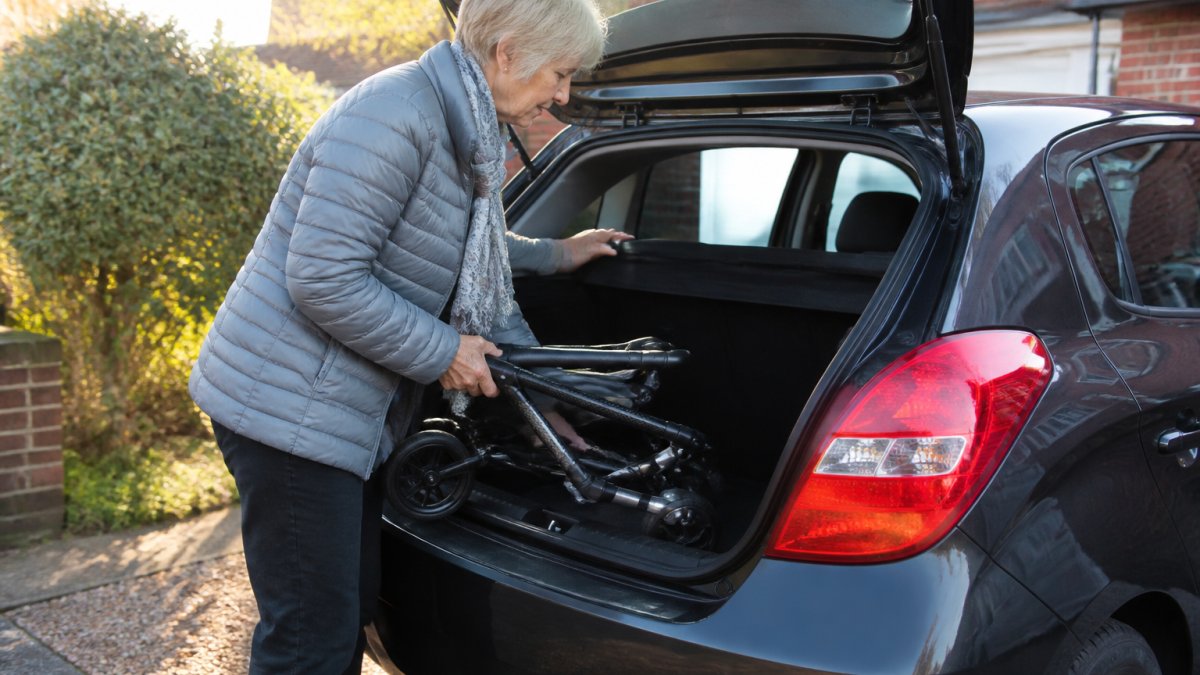
Carbon fibre is simply the frame material, and it appears in rollators, walking aids, transit wheelchairs and folding powerchairs alike.
At Etech Mobility, we sell lightweight folding electric wheelchairs, and frame material is the question customers ask about most.

Carbon Fibre Mobility Aid Weight: What the Numbers Actually Look Like
Weight is the headline benefit. For a folding powerchair the gap is wider: the lightest magnesium and carbon options sit near 12 kg, where a conventional steel-framed electric wheelchair can exceed 30 kg.

A few kilograms matter because the lifting happens at the worst possible moment, usually when you are alone, tired, and holding a car boot open with your shoulder.
A common mistake is comparing weight figures without checking what is included. Battery, footrests, basket and seat cushion often sit outside the quoted frame weight.
Carbon Fibre vs Aluminium Mobility Aids: Which Frame Suits You?
Aluminium is the sensible default for most buyers; carbon fibre is the upgrade for a specific set of problems. Aluminium costs less, tolerates knocks, and can be welded or bolted back together by any competent repairer. Carbon fibre costs more, resists fatigue better and absorbs road vibration more effectively, but it does not forgive impact damage.
Strength-to-Weight Ratio and Ride Stability
Carbon fibre's strength-to-weight ratio is its core advantage: a carbon frame carries the same load as a heavier aluminium one while weighing considerably less, and it dampens the small vibrations that travel up through wheels and handles on paving slabs and kerbs.
That vibration absorption is the underrated part: vibration through the arms and shoulders is what makes a long walk on uneven pavement tiring.
Cost, Warranty and Long-Term Value
Carbon fibre mobility aids cost more upfront, and that premium buys weight savings, not extra features. Whether it pays off depends on how often you lift the device and how long you need it to last.
| Factor | Carbon Fibre | Aluminium |
|---|---|---|
| Typical frame weight | Lightest available | Moderate |
| Upfront cost | Higher | Lower |
| Repair after impact | Usually frame replacement | Often repairable |
| Vibration absorption | Better | Adequate |
| Best for | Frequent lifting, travel | Everyday use, tighter budgets |
Our own range shows how the trade-off plays out. The MagNeo ultra-lightweight magnesium electric wheelchair weighs 12.3 kg, folds to just 35 cm tall, and carries a 120 kg capacity with two quick-release airline-friendly batteries, priced at £999.99. The Aeron aluminium folding electric wheelchair is the value alternative at £849.99, with larger wheels for a stable ride on pavements and promenades.
Carbon Fibre Mobility Aid Durability: How Long Do They Last?
A well-made carbon fibre frame typically outlasts an equivalent aluminium one under normal use, because composites resist the metal fatigue that weakens welded joints. Aluminium develops micro-cracks at weld points and bolt holes over years of flexing; a correctly laid-up carbon tube has no welds to fatigue.
Carbon fibre does not bend and stay bent the way a metal tube does.
How to Inspect a Carbon Frame Yourself
A five-minute check after any impact catches most problems before they become a failure on the pavement:
- Run a fingernail along the tube. A crack or delamination catches the nail; a scratch in the clear coat does not.
- Look for a dull, whitish patch under the lacquer. That is usually resin cracking or fibre separation, not cosmetic wear.
- Tap the tube lightly with a coin. A clean carbon tube rings; a delaminated one sounds flat or dead.
If you find a crack, stop using the aid. Do not tape it, wrap it or continue until it has been assessed.
Damage, Repair and What Cannot Be Fixed
This is where carbon fibre loses its shine. A bent aluminium tube can often be straightened or replaced by a local mobility engineer, and a snapped weld re-welded. A cracked carbon tube generally cannot be repaired to a safe standard in a workshop, because the load path runs through the fibres themselves, a patch or resin repair can look sound while the structure underneath is compromised, and the failure point is usually sudden.
In practice, that means:
- Cosmetic scuffs in the clear coat are harmless and can be left alone.
- Chips that expose the weave should be sealed by the manufacturer or an approved repairer to stop moisture ingress.
- Cracks, delamination or a soft spot almost always mean frame replacement, not repair.
Warranty, Spare Parts and the Real Cost of Ownership
Check the warranty terms before buying, and read them as carefully as the specification. Most brands cover the frame against manufacturing defects for a set period but exclude impact damage, accidental drops and normal wear to wheels, brakes and upholstery, standard across the industry rather than a sign of a poor supplier.
Three questions worth asking any retailer before you commit:
- How long is the frame warranty, and does it transfer if I sell the aid on?
- Can I buy individual spare parts, wheels, brake assemblies, seat cushions, batteries, or is the aid treated as a sealed unit?
- What is the lead time and cost on a replacement frame if the original is damaged out of warranty?
A composite frame that cannot be repaired is only good value if the parts network behind it is strong. On a powered aid, the battery is usually the first component to need replacing, so confirm battery availability and price before you buy.
Folding Frames, Built-In Seats and Everyday Manoeuvrability
Manoeuvrability indoors depends on width and turning circle, not weight. Measure your narrowest doorway and hallway before you buy, then compare against the folded and unfolded width in the specification.
MagNeo – 12.3kg Ultra-Lightweight Magnesium Electric Wheelchair →
Outdoors, wheel size does the work. For smooth outdoor surfaces, our Aeron folding electric wheelchair uses larger wheels for exactly this reason, and the Converge 180 adds an 11-degree climbing capability for ramps.
Weight Limits, Safety and Correct Use
Every mobility aid has a maximum user weight, and exceeding it is the single most common cause of frame failure. Carbon fibre is strong, but it is engineered to a stated limit, and that limit assumes the load is spread as the designer intended, not dumped onto one handle or one corner of the seat.
Reading a Weight Limit Properly
Manufacturers quote a maximum user weight, but that figure assumes the aid is used as intended: seated centrally, on level ground, with the brakes applied before you sit or stand.
Check three figures before you buy, and check them against your own circumstances rather than the brochure:
- Maximum user weight, compare against your weight with outdoor clothing and footwear, not your weight first thing in the morning.
- Product weight, the ready-to-use figure, including battery, seat and footrests, not the bare frame.
- Folded dimensions, measured against your car boot, your hallway and your narrowest doorway.
If your weight is close to the stated limit, choose the next capacity up. A frame running at 95% of its rated load has no margin for the kerb drop, the uneven paving slab or the moment you stumble and catch yourself on one arm.
Brakes, Stability and Terrain
Brakes are the safety feature people check least and rely on most. On a rollator, confirm the squeeze brake for slowing and the locking brake for parking work independently, and test them before every trip. On a powered aid, test the electromagnetic brake by stopping on a gentle slope and confirming the chair holds when you release the joystick.
Stability comes from geometry as much as material, so treat these as hard limits rather than suggestions:
- Slopes, most aids are rated for a maximum incline, often around 6 to 12 degrees depending on the model. Never exceed the stated figure, and never turn across a slope at speed.
- Kerb, approach kerbs square-on and only where the aid is rated to climb them. A carbon frame is stiff, not indestructible, and a dropped kerb edge is a classic impact-damage trigger.
- Uneven ground, grass, gravel and cobbles demand larger wheels and a slower pace. Smaller indoor wheels can catch and tip on a raised paving edge.
A Short Pre-Use Check
Run through this before you leave the house, every time:
- Brakes engage and release cleanly, and the parking lock holds
- Handles are locked at the correct height and do not twist under load
- Folding mechanism is fully engaged with no rattle
When to Ask a Professional
If you are unsure whether a device suits your condition, strength, dexterity or home layout, ask a qualified professional before buying. In the UK, an occupational therapist can carry out a mobility assessment, and your GP can refer you; some local authority adult social care teams also provide assessment and equipment. A mobility assessment costs far less than a device you cannot use or cannot safely get out of.
A simple decision framework:
- Poor balance but good upper-body strength, a four-wheel rollator with a seat and locking brakes is usually the starting point.
- Weak grip or arthritic hands, prioritise brake levers that need light pressure, and avoid aids with fiddly folding catches.
- Low stamina or breathlessness, a powered aid with a seat and a good battery range will extend your range further than a lighter manual frame.
Choosing the Right Mobility Aid for Your Needs
Start with the task you cannot currently manage, not the specification sheet. If the problem is lifting the device into a car, weight decides it.
A practical way to decide:
- If you lift the device daily, prioritise the lowest ready-to-use weight
- If you travel by air, check the battery is airline-friendly and quick-release
- If you have narrow doorways, measure before you shortlist
For most people who lift their chair regularly, our lightest option is the natural starting point: the MagNeo at 12.3 kg with a 35 cm folded height. If you need a higher capacity, the Converge 180 supports up to 180 kg and splits into a 16 kg main lifting section. If budget is the priority, the LiteMax 2 starts at £794.99.
For anyone who only needs occasional support and a companion to push, the Stride transit wheelchair weighs 13 kg, folds to a 24 cm width and costs £129.99.

Choosing a mobility aid is a trade-off between weight, cost, durability and fit, and no single frame material wins on every count.
Frequently Asked Questions
What is a carbon fibre mobility aid?
A carbon fibre mobility aid is any walking support, rollator or wheelchair whose frame is built from carbon fibre composite rather than aluminium or steel. The material is a woven fibre set in resin, which makes it very stiff for its mass. In practice this means a carbon fibre mobility aid weighs less than a comparable metal one, so it is easier to lift into a car boot, carry upstairs or store in a small hallway. The trade-off is a higher purchase price and a frame that needs sensible handling.
Are carbon fibre mobility aids lighter than aluminium ones?
Yes, generally. Carbon fibre mobility aid weight is typically lower than an equivalent aluminium frame because the composite is stiffer per gram, so less material is needed to hit the same strength target. The gap widens on larger items such as wheelchairs. For example, the MagNeo magnesium-alloy powerchair weighs 12.3 kg, while the Aeron aluminium folding powerchair weighs 15.4 kg. Always check the stated kilogram figure for the exact model rather than assuming every carbon frame is the lightest option available.
How durable is carbon fibre in a mobility aid?
Carbon fibre mobility aid durability is good under normal everyday use: the frame resists fatigue, does not rust and holds its shape over years of pavement and shopping-centre trips. The weak point is impact. A sharp knock against a kerb or a dropped frame can crack the resin, and cracks spread. Inspect the frame monthly for hairline splits, especially around joints and folding mechanisms. Store it indoors, avoid leaving it in a hot car for long periods, and it will typically outlast a cheap steel frame.
What is the downside of carbon fibre?
Three things. Cost is the main one, since carbon frames carry a price premium over aluminium. Repair is the second: a cracked carbon tube usually cannot be welded or patched reliably, so the frame may need replacing. Third, carbon fibre is brittle under sharp impact rather than bending like metal. If you regularly bump kerbs, travel on rough ground or need a frame you can bash about, aluminium may suit you better. Carbon rewards careful handling.
What should I check before buying a carbon fibre mobility aid?
Check five things: the stated weight in kilograms, the maximum user weight limit, the folded dimensions against your car boot and doorways, the handle height range, and the warranty terms. Also confirm the model meets BS EN 12184 if it is a powered chair, and ask what happens if the frame is damaged. A clinical assessment through your GP, occupational therapist or a community mobility service will confirm whether a rollator, manual wheelchair or powerchair is the right category for you before you spend anything.
Is carbon fibre used in prosthetics as well as mobility aids?
Yes. Carbon fibre is widely used in prosthetic limbs, sports wheelchairs and orthotic devices because it is stiff, light and can be moulded into curved shapes. That same set of properties is why it appears in rollator frames, walking sticks and folding powerchair chassis. If you already use a carbon prosthesis, you will recognise the feel: rigid under load, low in weight, and cool to the touch. The handling advice is similar too, so protect the surface from sharp impacts.