
7 Tips to Extend Electric Wheelchair Battery Life
Table of Contents
- 1. Master Your Daily Charging Habits
- 2. Avoid Deep Discharge to Protect Battery Health
- 3. How Long Do Electric Wheelchair Batteries Last
- 4. Powerchair Battery Charging Best Practices
- 5. Lithium vs Lead-Acid Powerchair Batteries: Which Lasts Longer
- 6. Store Your Wheelchair Correctly During Periods of Inactivity
- 7. Recognise Signs Your Battery Needs Replacement
- Frequently Asked Questions
Last Updated: September 25, 2026
1. Master Your Daily Charging Habits
How you charge your wheelchair daily directly affects electric wheelchair battery life and longevity.
Charge regularly after each use rather than waiting until nearly empty. Lithium-ion batteries perform best with frequent partial charging rather than occasional full charges.
Disconnect the charger within an hour of full charge to avoid overcharging, which creates heat and chemical stress that reduces capacity over time.
Charge in moderate conditions (15-25°C). Allow the wheelchair to warm to room temperature before charging if used in cold weather.
Consider investing in a faster charger if you frequently need quick top-ups. The 24V 3A Battery Charger saves approximately 2 hours compared to standard chargers, which can be invaluable for active users. However, faster charging does generate slightly more heat, so monitor your battery temperature during use.

2. Avoid Deep Discharge to Protect Battery Health
Deep discharge, draining your battery completely, permanently reduces capacity by stressing the chemical structure inside.
Keep your battery above 20% charge whenever possible. If your wheelchair's display shows a low-power warning, stop using it and charge immediately. Pushing past that warning to extract the last few kilometres causes measurable damage that accumulates over time.
Lithium-ion batteries handle partial discharge cycles far better than complete drains. A battery cycled 100% to 20% repeatedly lasts significantly longer than one cycled 100% to 0%.

Lead-acid batteries degrade faster when fully drained, so avoid running them completely flat.
Plan your trips around your battery capacity. If your wheelchair typically gives you 25 kilometres on a full charge, don't plan a 24-kilometre journey expecting to arrive home with battery to spare. Build in a safety margin of at least 20% remaining charge.
3. How Long Do Electric Wheelchair Batteries Last
Electric wheelchair battery life depends on chemistry, usage patterns, and maintenance.
Lithium-ion batteries typically last 2-3 years with regular use and proper care, degrading roughly 2-5% per year and gradually losing range.
Lead-acid batteries generally last 1-2 years and degrade faster if charged inconsistently or fully discharged.
The number of charge cycles your battery undergoes is the primary factor in longevity. A charge cycle is counted when you use 100% of the battery's capacity, whether in one session or across multiple partial uses. A battery rated for 500 charge cycles will last much longer if you only use it for short trips and charge frequently compared to using it for long trips and charging rarely.
Frequent partial charging is gentler on battery chemistry than occasional full discharges, so daily short trips extend battery life more than weekly long trips.
Batteries in warm environments (above 25°C) degrade faster; warm climates may reduce lifespan by 6-12 months.
| Battery Type | Typical Lifespan | Best For | Charge Cycles |
|---|---|---|---|
| Lithium-ion | 2-3 years | Active daily users | 500-800+ |
| Lead-acid | 1-2 years | Occasional users | 300-500 |
| Lithium-ion (premium) | 3-4 years | Frequent users with careful charging | 800+ |
4. Powerchair Battery Charging Best Practices
Proper charging technique is essential to extending electric wheelchair battery life.
Use the charger designed for your wheelchair model. Verify voltage (typically 24V) and amperage rating before purchasing a replacement.
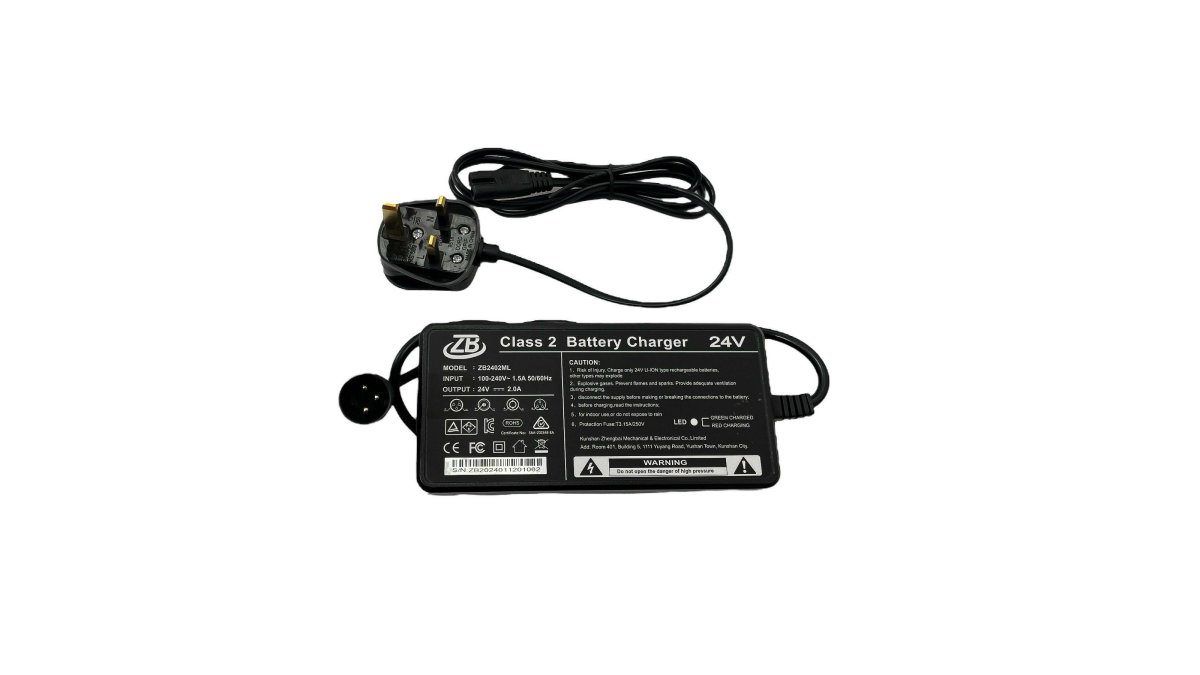
The 24V 2A Battery Charger provides standard charging speed suitable for most daily use patterns. If you need faster charging for active schedules, the 24V 3A charger reduces charging time significantly whilst remaining safe for lithium-ion batteries.

Charge with the wheelchair switched off. Direct battery charging is often gentler than charging through the control unit; check your manual for the recommended method.
Battery Charger for Electric Wheelchair →
Inspect the charging port for dirt or corrosion before connecting; wipe gently with a dry cloth if needed.
Avoid charging in damp environments to prevent electrical faults that damage the battery management system.
Monitor charging time; if it takes significantly longer than normal, your battery may be failing.
5. Lithium vs Lead-Acid Powerchair Batteries: Which Lasts Longer
The battery chemistry in your wheelchair dramatically affects how long it will last and how you should maintain it. Understanding the differences helps you make informed decisions about replacement batteries and care routines.
Lithium-ion batteries are the modern standard for quality electric wheelchairs. They're lighter, more energy-dense, and last considerably longer than lead-acid alternatives. A lithium-ion battery can deliver consistent power throughout its charge cycle, meaning your wheelchair maintains full speed and torque until the battery is nearly empty. Lithium-ion technology also handles charge cycles more gracefully, you can charge it partially without penalty, which is ideal for daily use.
Lead-acid batteries are older technology, still used in budget-friendly or entry-level models. They're heavier, require more maintenance, and degrade faster. Lead-acid batteries suffer from "sulfation" when left uncharged, a chemical process where lead sulfate crystals build up inside the battery, permanently reducing capacity (Checking your browser). If you use a lead-acid wheelchair sporadically and leave it uncharged for weeks, you'll see noticeable battery degradation.
Charging behaviour differs between chemistries. Lithium-ion batteries prefer frequent partial charging and tolerate being left fully charged briefly. Lead-acid batteries benefit from being fully charged and stored, but they degrade if left in a partially charged state. If you own a lead-acid wheelchair, always return it to full charge after use, even if you only used a small amount of battery.
Temperature sensitivity also differs. Lithium-ion batteries are more sensitive to heat but less sensitive to cold. Lead-acid batteries are more forgiving in hot conditions but perform poorly in cold weather. If you live in a cold climate, a lithium-ion battery will serve you better; if you're in a warm region, both types require careful temperature management, but lead-acid degrades faster overall.
Cost and lifespan create a clear picture: lithium-ion batteries cost more upfront but last 2-3 times longer, making them more economical over time. A lead-acid battery might cost less initially, but you'll replace it more frequently.
Etech Mobility offers lithium-ion batteries for its range of electric wheelchairs, including models like the 24V 12Ah Lithium-ion Battery for Freedom Pro, which provide reliable, long-lasting power for active users. Consistent monitoring of these power cells ensures peak performance over time, and understanding the nuances of testing battery range helps users better predict their daily travel capacity.
6. Store Your Wheelchair Correctly During Periods of Inactivity
How you store your wheelchair when you're not using it significantly affects battery longevity. Improper storage can cause permanent capacity loss, even if the wheelchair sits unused for just a few weeks.
Charge your battery to approximately 50% before storing your wheelchair for extended periods. This "middle-of-the-road" charge state is the safest for lithium-ion batteries during inactivity. A fully charged battery sitting idle slowly loses charge and experiences slight chemical stress. A deeply discharged battery risks sulfation (if lead-acid) or internal damage (if lithium-ion).
Store your wheelchair in a cool, dry location. Ideally, keep it between 10-20°C with low humidity. Basements, sheds, and garages work well if they're not damp. Avoid attics or outdoor storage where temperature swings and moisture exposure accelerate battery degradation. If you must store outdoors, use a waterproof cover and check on your battery monthly.
Disconnect the battery if you're storing the wheelchair for more than a month.
7. Recognise Signs Your Battery Needs Replacement
Even with perfect maintenance, batteries eventually degrade and require replacement. Recognising the warning signs early prevents you from being stranded without mobility.
Frequently Asked Questions
Should you charge an electric wheelchair every night?
Not necessarily. Modern lithium-ion batteries benefit from partial charge cycles rather than full overnight charges. Aim to charge when the battery drops to 20-30% capacity, and remove the charger once it reaches 80-90%. This approach extends the lifespan of your electric wheelchair battery significantly compared to daily full charges. If you use your chair minimally some days, skip the charge and wait until the next usage cycle.
How long should an electric wheelchair battery last?
Lithium-ion batteries typically last 3-5 years with proper care, while lead-acid batteries usually last 1-2 years. Actual lifespan depends on charge cycles, storage conditions, and usage patterns. Regular maintenance and avoiding deep discharge significantly extend this timeframe.
Can you overcharge an electric wheelchair battery?
Modern chargers have built-in protection to prevent overcharging, so leaving your chair plugged in won't cause immediate damage. However, regularly charging to 100% capacity reduces battery longevity. Most battery management systems (BMS) automatically stop charging once full capacity is reached. To maximise your electric wheelchair battery life, disconnect the charger at 80-90% when possible, and avoid leaving it plugged in continuously for extended periods.
What temperature is best for storing an electric wheelchair battery?
Store your battery in a cool, dry environment between 15-25°C. Extreme heat accelerates degradation, whilst cold temperatures reduce performance temporarily. Never store in damp conditions, as moisture can damage the charging port and internal circuitry. During winter months or extended periods of inactivity, keep your wheelchair in a climate-controlled space. If you must store outdoors, use a protective cover to shield from temperature fluctuations and moisture.
What are the signs that a powerchair battery needs replacing?
Watch for reduced range between charges, slower acceleration, or the chair cutting out unexpectedly. If your battery no longer holds charge after a full charging cycle, or if you notice swelling, corrosion around the charging port, or a burning smell, replacement is urgent. If your chair is over 3-5 years old and experiencing these issues, contact Etech Mobility support to arrange a replacement battery compatible with your model.